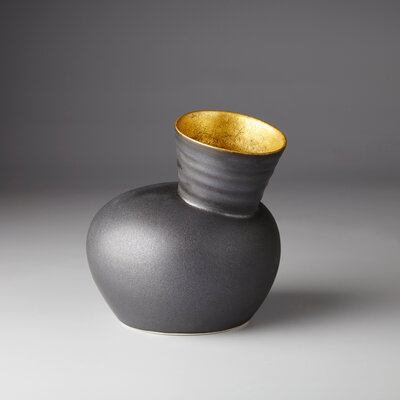
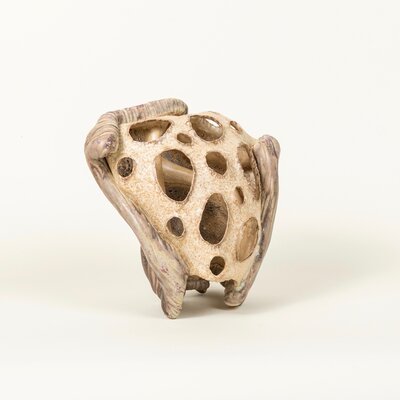
You will develop an understanding of a range of methods which can be used to throw taller pieces and explore the potential of elongated forms.
This course is suitable for anyone who has already developed some throwing skills and wants to make taller pieces.
Getting more height when throwing involves techniques and skills which develop with practice; it appears so easy when watching potters, but there are times when the more you pull the clay, the shorter the piece becomes. This course will help you overcome these problems by helping you develop confidence in your understanding of how to throw clay effectively to create all kinds of taller forms.
- You will explore throwing techniques that enable you to pull clay upwards into tall, elongated forms.
- You will explore different methods of joining sections and adding coils to extend possibilities beyond your current capabilities.
- You will be able to consider methods of turning and finishing tall pieces.
- You will develop a more critical approach to examining form and structure, enabling you to apply this quickly when making decisions as you throw.
By the end of the course, you will have developed your understanding of the dynamic qualities of vertical forms, and you will have developed the capacity to design, plan and make more complex pieces from vases to jugs, to vessels or constructed abstract forms.
You will have the opportunity to make a group of tall thrown pieces that encompass your freshly acquired skills. You will also be able to work in the pottery studio each evening to extend work and prepare for the next days activities.
Included
On this course, the College will supply most of the materials required for the specific project set by the tutor or shared by the group, including clay and slips.
The cost of clay/glazing materials and firing costs of work made is included – large work in size and quantity may be charged extra.
What students need to bring
- a piece of your Work that is tall
- Throwing/ turning tools and Brushes that you already have
- a sketchbook and Pencil
- some type of camera, if you like to record things in this way
- an overall, old towel and medium-sized, lidded, plastic box to keep pieces damp
- Thin, clean plastic for covering Work
- Cardboard boxes - useful if taking raw pots away at the end of the course
Available to buy
Available from shop:
- A small selection of pottery tools, sketching and drawing materials
Additional information
Please wear appropriate clothing/aprons for the workshop or studio. This includes stout covered footwear, i.e. no open-toes or sandals.
Firing and glazing options:
-
Leave a selection of your most successful raw finished pieces for biscuit firing, basic glazing and re-firing by the College, for collection within six months.
-
Leave a selection of your most successful raw finished pieces for biscuit firing at the College. You can then book a place on a Glazing Day and glaze your own work (allowing four weeks for your work to be biscuit fired). This work will be re-fired after glazing and available for collection within six months.
-
Take away your unfired pots for firing and glazing elsewhere.
Arrival day - first date of course
Residential students can arrive from 4pm, non-residential students to arrive by 6.45pm for registration
Student welcome, followed by dinner: 6.45pm (dinner included)
Teaching session: 8pm-9pm (attendance is essential)
Daily timetable
Course teaching: 9.15am-5pm
Morning session: 9.15am-12.45pm including coffee/tea break
Lunch break: 12.45pm-2pm (lunch included)
Afternoon session: 2pm-5pm including coffee/tea break
Teaching finishes: 5pm
Evening working: students may have access to workshops until 9pm, but only with permission from the tutor and provided any health and safety guidelines are observed.
Departure day - last date of course
Course teaching: 9.15am-3pm (lunch included)
Teaching finishes: 3pm
Residential students will need to check out of rooms by 10am.
Please note, the tutor may make slight variations to the daily timetable as required.