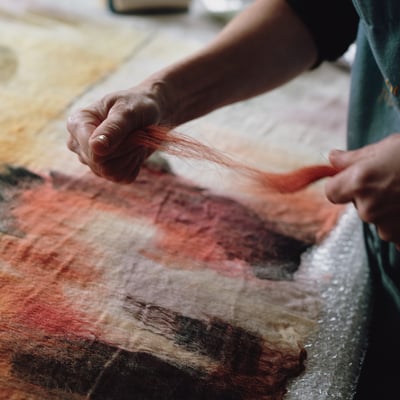
This course is based on the idea of mark-making and surface texture in tapestry, finding expressive ways to describe the movement, weight and substance of the things around us through the use of traditional woven techniques. Building a relationship between material and structure you will connect with the dynamic processes associated with fibre art and the work of artists such as Magdalena Abakanovicz and Sheila Hicks.
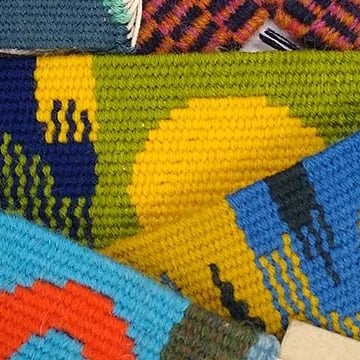
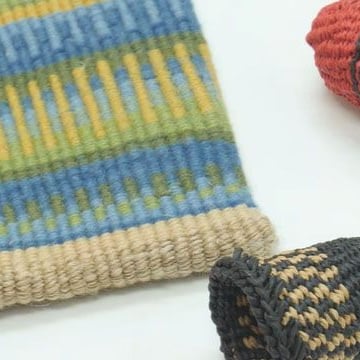
We will begin by making a series of samples that teach techniques such as soumak, ghiordes knots, wrapping and extruding, exploring the endless variations that different yarns and fibres can bring to the process. Having mastered these techniques, you will use your new vocabulary of textile mark-making to work between image and surface texture, experimenting with the translation of drawn marks into tapestry (you dont have to be good at drawing to do this!). A variety of fibres and yarns will be available for you to work with and we will use some basic dyeing techniques to give you a more personalised palette. Large frames or scaffolding will be available for you to work on so that the ambition of scale becomes part of the process. You will use a heavy warp to build your tapestry quickly and over the five days the aim is to make a number of samples and a finalised piece that brings together some of the textures, colours and surfaces that have inspired you.
A wide variety of samples that demonstrate the techniques will be available for you to study as well as relevant contextual material. There will be talks introducing you to a number of artists who have pioneered this exciting area of textiles. The approach will be discursive and interactive, with plenty of room for discussion and the freedom over the course of the week to develop an individual expressive approach to this way of making.
Immersive Art School Week
This course is part of our ‘Immersive Art School’ group of short courses for summer 2026, led by talented artist-tutors.
- Fibre Art Basketry - Tim Johnson
- Practice and the Individual – In Textiles - James Hunting
- Adventures in Rust Stain and Screen Print - Jane Fox and Jane Sampson
- Painting Large Inspired – Hockney's Big Splash of Colour - Louise Rainbow
- Woodfired Ceramics – Gestural Making, Kiln Building and Firing - Ben Brierley
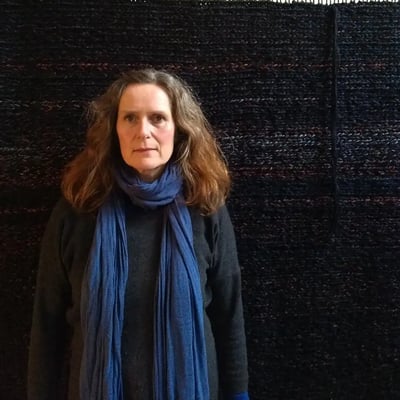
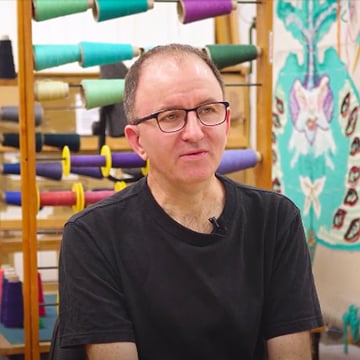
- Mark-making in Woven Tapestry – Textural Techniques - Rachel Johnston
- Damascus Steel Making - John Mosse
- Landscape to Studio - Drawing to Painting at West Dean - Nick Bodimeade
There will be tutor talks on Tuesday evening from 5:15 to 6.15pm in The Old Library as part of the course. Studio visits are encouraged to share work and experiences (out of core teaching hours).
Find out more about Immersive Art Week