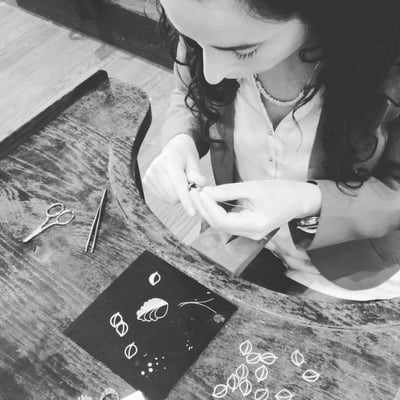
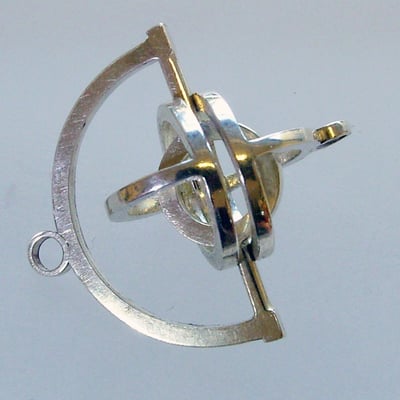
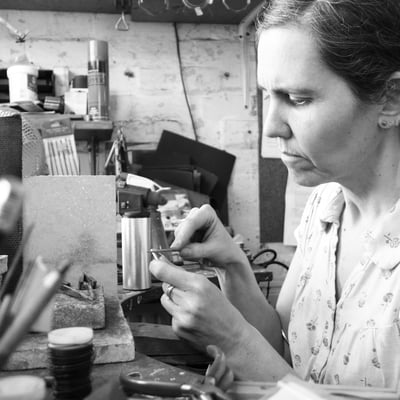
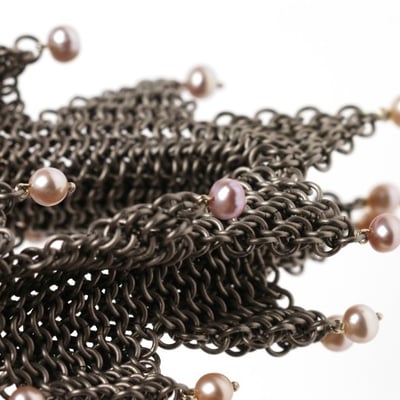
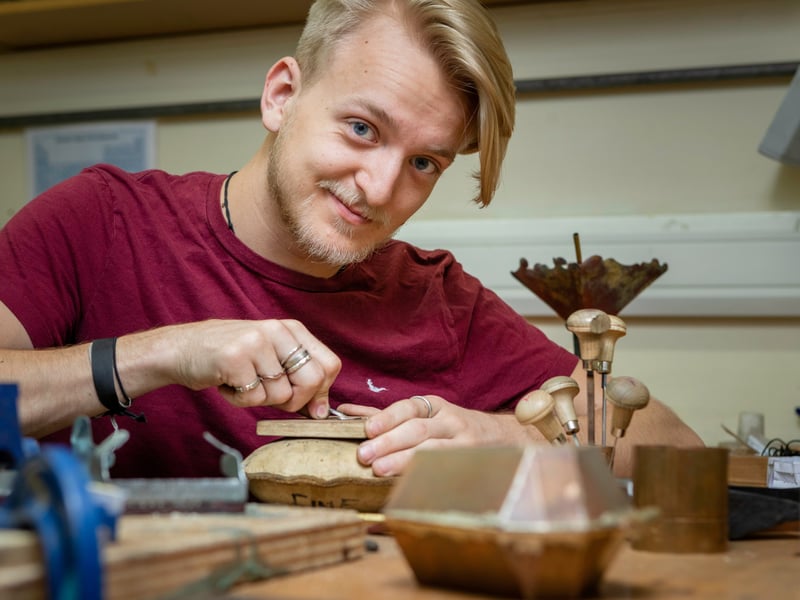
Filigree is a 5,000-year-old jewellery technique, which uses fine twisted threads of silver or gold to create the most varied designs. You will learn the skills of this ancient jewellery technique through practical demonstrations, handouts and individual practice.
You will learn how to make your own filigree tools and take these home with you. You will be taught how to make the special filigree wire, three different filigree designs and how to solder and finish these. The tutor will work with you as a group and individually, and will support and guide you through your learning.
By the end of the course, you will have created one piece that you can take home and enjoy.
Included
On this course, the College will supply all materials, including a brass disc, brass sheet, silver solder, black acrylic, round silver annealed wire and square silver wire. You may need to purchase extra from the shop depending on your design.
What students need to bring
The College provides a basic set of jewellery tools; please bring any jewellery tools you may have (labelled with your name).
Available to buy
Available from shop:
Silver can be purchased from the College Shop, which stocks a range of sheet, wire, rod, tube and findings. These will be available in set sizes and lengths, suitable for a wide range of projects.
Additional information
Please wear appropriate clothing/aprons for the workshop or studio, this includes stout covered footwear (no sandals or open toes). Possible equipment restrictions in tutor absence.
Arrival day - first date of course
Residential students can arrive from 4pm, non-residential students to arrive by 6.45pm for registration
Student welcome, followed by dinner: 6.45pm (dinner included)
Teaching session: 8pm-9pm (attendance is essential)
Daily timetable
Course teaching: 9.15am-5pm
Morning session: 9.15am-12.45pm including coffee/tea break
Lunch break: 12.45pm-2pm (lunch included)
Afternoon session: 2pm-5pm including coffee/tea break
Teaching finishes: 5pm
Evening working: students may have access to workshops until 9pm, but only with permission from the tutor and provided any health and safety guidelines are observed.
Departure day - last date of course
Course teaching: 9.15am-3pm (lunch included)
Teaching finishes: 3pm
Residential students will need to check out of rooms by 10am.
Please note, the tutor may make slight variations to the daily timetable as required.