There has been an increasing interest in the methods, materials and techniques that underpin the care of heritage objects in recent years. Programmes such as The Repair Shop have shown some of the wide range of skills that conservators use to protect and stabilise collections, making them able to be accessed and used for the future.
Using original library and archive objects, this short course will provide an introduction to some of the materials and techniques that written heritage conservators use to care for library and archive collections.
It will include:
- The role of library and archive conservators in protecting written heritage
- The role of their storage environment and use in their long term stability
- An overview of material types used historically in collections, including paper, skin materials such as leather and parchment, and the composition of different media types
- The handling and ageing characteristics of historical library and archive materials
- The materials used in conservation of written heritage collections for repair, reconstruction and support
- Basic treatments such as cleaning, simple repair methods and housing solutions
By the end of the course, you will have:
- Gained a broad understanding of the role of a library and archive conservator
- Understood potential career pathways in conservation
- Discovered the materials that have been used over time to create written heritage objects
- Understood some of the potential issues with these materials in terms of degradation and damage, and how they interact with each other and their environment
- Practised some basic conservation techniques
Included
On this course the materials required for techniques introduced are included.
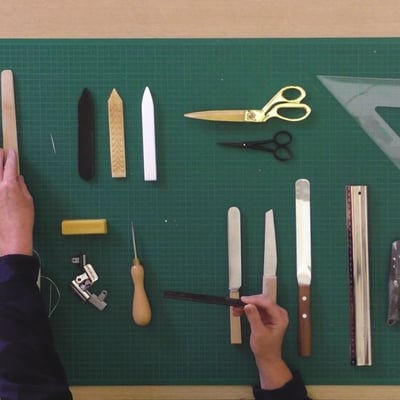
A basic conservation toolkit, including bone folder, scalpel handle and a pack of blades, tweezers, precision scissors, paste brush and safety ruler, is available for use on the day
What students need to bring
An apron
Additional information
Please wear appropriate clothing/aprons for the workshop or studio, this includes stout covered footwear (no sandals or open toes).
Student registration: 10.30am - 11am
Course teaching: 11am – 5.15pm
Morning session: 11am - 1pm
Lunch break: 1pm - 2pm (lunch is not included)
Afternoon session: 2pm - 5.15pm (15 minute break, 3.30pm–3.45pm)
Teaching finishes: 5.15pm