Portrait painting in oils with Luca Indraccolo

Ref: S5D40002

Book now

Places available

About this course

Learn how to successfully approach portrait painting in oils. You will observe the sitter in the same sustained pose from life, covering topics like anatomy, colour theory, values, edges and medium.

Course Description

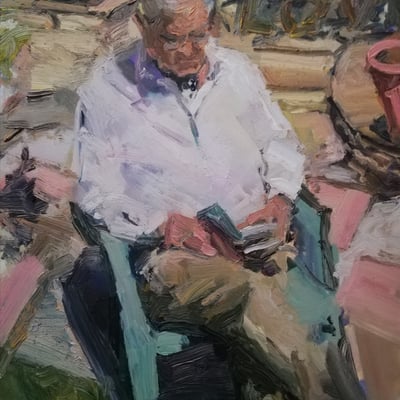
Learn how to successfully approach the complicated subject of portraiture painting in oils. You will observe the sitter in the same sustained pose from life to understand the planes and anatomical structure of the head and what to look for to achieve a likeness.

During the course you will look at:

  • The anatomy of the skull (useful landmarks from an artist’s point of view) - this will allow you to control proportions when working from life, given the inevitable subtle movements and slight changes in the pose by the sitter.
  • Standard proportions and planes of the head - understanding ideal proportions is a very useful tool to be able to capture a likeness, as the individual character of a particular face relates to this basic structure.
  • Basic composition strategies for a portrait - you will look at how to place the portrait within the confines of the canvas format.
  • Different approaches on how to start a painting in oils - depending on your level of expertise and confidence, you will either draw on paper and transfer the drawing, or start directly on the canvas.
  • How to organise a value range to convey a convincing light impression - colour theory and how it applies to practical paint mixing.
  • The correct use of medium - we will discuss the ‘fat over lean’ principle and its benefits.
  • The importance of edges to achieve the impression of form and how to manipulate a background to add a sense of depth and atmosphere.

By the end of this course, you will understand the stages involved in creating a realistic portrait painting and will have learned techniques you can apply to your own work and studies going forward.

Course Materials

Included

The model who will sit for the course

What students need to bring

Oil Paints Some of the following pigments might be hard to come by - an alternative is suggested:

  • Lead White – PW 1 (recommended) or Titanium White - PW 6
  • Nickel Yellow - PY 53 or Cadmium Yellow Light - PY 35
  • Raw Sienna Deep - PBR 7
  • Cadmium Red - PR 108 or Transparent Oxide-Red
  • Lake - PR 1Q1 or Italian Brown-Pink Lake – PR 101 + PY 42 (by Old Holland)
  • Alizarin Crimson Lake Extra - PV 19 + PR 177 + PBR 23 or Permanent Alizarin Crimson - PR 177 (both permanent versions of Alizarin)
  • Cobalt Blue - PB 28 or Ultramarine Blue PB 29
  • Raw Umber - PBR 7
  • Ivory Black - PBK 9
  • Old Holland and Windsor & Newton oil paint series should have most of the above mentioned colours, though any brand will do, as long as the paint is ‘artist’ quality and not ‘student’ quality.

Brushes Overall, a good selection of brushes should be used. The more brushes, the easier it is to keep colour mixes clean. A variety of sizes is essential for handling large areas of the painting as well as small details. However, a set of at least 10 ‘filberts’ and/or ‘flats’ should be enough to get started. Your tutor uses mainly hog bristle brushes, as they have quite a spring and lend themselves to impasto painting, however if you are partial to a smoother finish, then softer bristles would be better.

A few very small synthetic brushes are very useful for small details as they give a sharper brush mark.

Other Materials

  • Stretched linen canvas or gesso panel. Your tutor recommends universal primed in a medium or fine grain, approx. 35cm X 45cm (or slightly bigger).
  • Wooden arm palette (if you are right handed, please bring a balanced palette for your left hand and vice versa).
  • If you know how to put down an imprimatura, please do so with a thin wash of Raw Umber, as this will save you painting time. Alternatively, there will be a demonstration on the first day for those who are unsure.
  • Two flexible steel palette knives
  • Linseed oil (either refined or cold pressed)
  • Odourless turpentine substitute for painting such as
  • Winsor and Newton Sansodor. Please, no turpentine or white spirit.
  • Airtight metal brush cleaner or glass jar with a lid for keeping solvent
  • Dipper for medium or small glass jar
  • A good supply of kitchen roll for cleaning brushes
  • Wet wipes
  • Disposable tupperware tub for keeping excess paint overnight
  • Something to carry your wet paintings home in or with on the last day - for this I recommend a canvas carrier - if you are unable to find one, another canvas of the same size as the painted one can be strapped to the front to keep the painting safe while being transported.

Optional Materials The list below is to give you different options when starting a painting depending on the individual level of experience (and confidence) with oil paint and colour mixing.

If you are very new to this medium, but are more familiar with drawing in pencil, your tutor would suggest to start on a piece of paper, then transfer the drawing to canvas before starting to paint. Similarly, if you’re not familiar with colour mixing, your tutor might suggest a small colour study to get the ball rolling.

  • Small canvas offcuts or canvas paper for colour studies (approx A4)
  • Cartridge paper and tracing paper. Both should be big enough to cover the entire canvas (as a single sheet or multiple sheets taped together)
  • Masking tape
  • Pencil (anything from HB to 2B)
  • Rubber
  • Ball point pen
  • Charcoal (soft willow charcoal will do)

Available to buy

Available from shop:

  • A good variety of art materials, including: Winsor & Newton artists’ quality oil paint in Lead White or Titanium White, Nickel Yellow or Cadmium Yellow Light, Raw Sienna Deep, Cadmium Red, Transparent Oxide-Red Lake or Italian Brown-Pink Lake, Alizarin Crimson Lake Extra or Permanent Alizarin Crimson, Cobalt Blue or Ultramarine Blue, Raw Umber and Ivory Black; a good selection of brushes - filberts and flats; steel palette knives; linseed oil, Sansodor and Zest-it; dippers and a good selection of drawing materials and papers, should you need them

Additional information

Please wear appropriate clothing/aprons for the workshop or studio, this includes stout covered footwear (no sandals or open toes).

Timetable

Arrival day - first date of course
Residential students can arrive from 4pm, non-residential students to arrive by 6.45pm for registration  
Student welcome, followed by dinner: 6.45pm (dinner included)
Teaching session: 8pm-9pm (attendance is essential)

Daily timetable
Course teaching: 9.15am-5pm  
Morning session: 9.15am-12.45pm including coffee/tea break  
Lunch break: 12.45pm-2pm (lunch included)  
Afternoon session: 2pm-5pm including coffee/tea break  
Teaching finishes: 5pm    
Evening working: students may have access to workshops until 9pm, but only with permission from the tutor and provided any health and safety guidelines are observed.

Departure day - last date of course
Course teaching: 9.15am-3pm (lunch included)  
Teaching finishes: 3pm  

Residential students will need to check out of rooms by 10am.
Please note, the tutor may make slight variations to the daily timetable as required.
General Information

Tutors

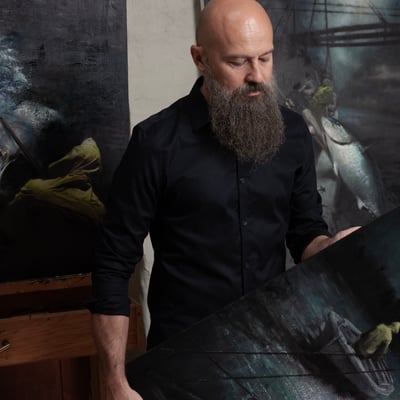
Luca Indraccolo

Luca Indraccolo is an Italian-born artist known for his skilful and realistic oil paintings. He specializes in figurative and narrative art.

Accommodation

Residential option available. Find out accommodation costs and how to book here.
Courses of interest

Oil painting for beginners

Online
Buy course
Tutor: George Popesco |
Beginners
£47

Exploring colour

Online
Buy course
Tutor: Mark Cazalet |
Intermediate
£47

Dynamic life drawing and painting

27 Feb 2026 to 2 Mar 2026 | West Dean
1 place available
Tutor: Chris Gilvan-Cartwright |
Suitable for all
£560

Contemporary portraits in oils

19 to 22 Mar 2026 | West Dean
Places available
Tutor: Rachel Mercer |
Suitable for all
£544
Further study options for art craft and design short courses

Further study options

Take the next step in your creative practice, with foundation level to Masters in Fine Art study. 

Depending on your experience, start with an Online Foundation Certificate in Art and Design (one year, part-time), a Foundation Diploma in Art and Design made up of 10 short courses taken over two years (part-time) or advance your learning with our BA (Hons) Art and Contemporary Craft: Materials, Making, and Place (six years part-time). All will help you develop core skills, find direction in your practice and build an impressive portfolio in preparation for artist opportunities or higher-level study. See all degree and diploma courses.