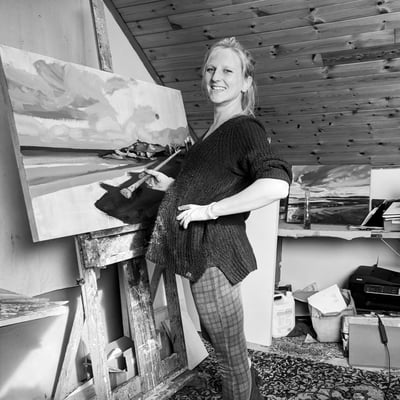
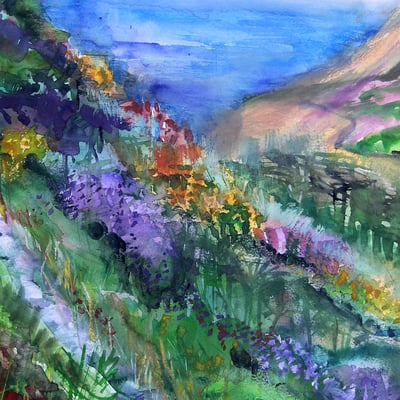
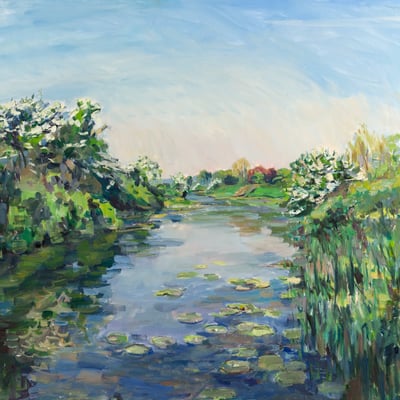
During the course, you will aim to develop practical techniques in representing the landscape using oil paint, develop confidence in objectively processing what you see and gain more insight into where you might situate yourself in the framework of landscape painters, past and contemporary. You will work from a mixture of photographs and direct observation of the landscape, weather permitting.
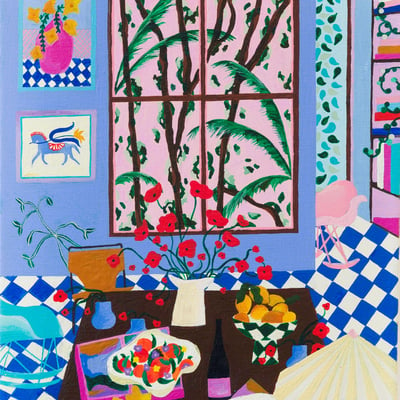
You will be encouraged to look rigorously at the use of tone, using charcoal and oil paint to explore tonal relationships. You will look in detail at colour mixing, with the goal of closely recreating with oils the colours you perceive in the landscape. This veracity to light and colour will enable you to free yourself with mark-making, exploring the ways in which the physical application of paint can enhance your work, lending expression and the suggestion of non-visual elements to an oil painting. You will look at the work of other painters for inspiration, to gain insight into different techniques and to understand the breadth of approach to landscape painting.
You will be supported to develop your own way of working, with your own goals and questions. The tutor will work with your unique needs and help you to develop your practice.
On the first evening, the focus will be on how artists collect source material, sketching and exploring the landscape through direct observation.
By the end of the course, you will be able to make decisions on how to compress the natural spectrum into one which can be described by paint, to convincingly recreate a tonal piece. You will be able to use these decisions to aid you in your observation and processing of colour, mixing colours which more closely resemble those of the natural world. You will be able to call upon a range of marks to lend expression and movement to your subsequent paintings, adding more dimension, feeling and artistic licence to a work, elevating it from a snapshot view to a representation of an experience of a landscape.