Hendrike Barz-Meltzer
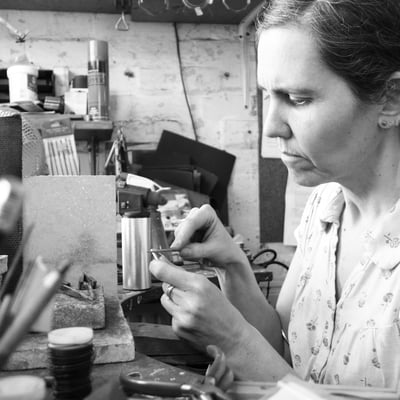
Hendrike graduated in jewellery design from Central St Martin’s in 1997.
Ref: S3D40285
This course will focus on learning techniques. Your tutor will demonstrate each technique, which you then practise on copper test pieces before applying your knowledge to making a piece in silver.
At the end of this course, you will have gained a good first (or refreshed) understanding of basic jewellery making processes. You will have made a number of test pieces and various finished silver pieces to take home and enjoy (see details below). You are encouraged to take notes to elaborate on your learning, but you will also be given various detailed technical handouts to serve as reference in the future and a tool list, should you wish to continue or take a further course.
First evening
Essential to jewellery making is thinking about what to make. The first evening will be spent focusing on the design process. We will discuss how to get ideas and develop them, how to translate ideas into materials, model making, playing with materials and, finally, how to evaluate your finished piece.
Day 1: 9.15am - 5pm
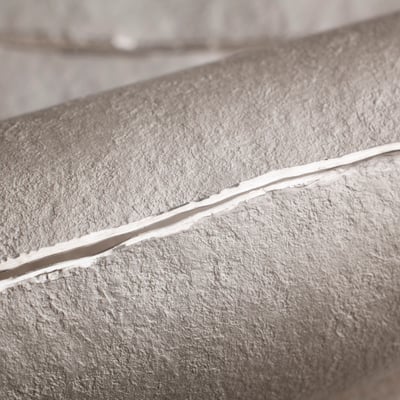
The first day of making will be spent learning a variety of techniques: how to saw, file and sand metal; how to create textures and marks on metal surfaces with hammers, punches and the rolling mill and how to hand-drill metal. You will also learn how to use the torch to soften (anneal) metal, as well as various hand-finishing techniques.
There will be plenty of time to make test pieces in copper with each of these techniques before then embarking on making your first piece in silver - a pair of long earrings - in a design of your choosing. Your tutor will discuss your ideas with you beforehand or will help you find a design.
Day 2: 9.15am - 5pm
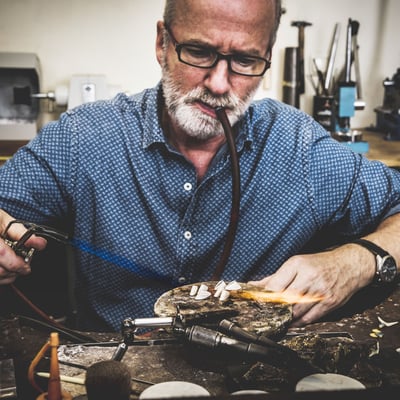
The second day will focus on soldering - that is how to join two metal pieces together using heat. Making jewellery can require different ways of soldering and you will learn how to tackle three common soldering situations. Furthermore, we will be focusing on using wires to make and join jump rings. After having made various soldering test pieces in copper, you will make a silver ring pendant. Your tutor will be on hand to help and discuss your ideas to personalise your piece.
Day 3: 9.15am - 3pm
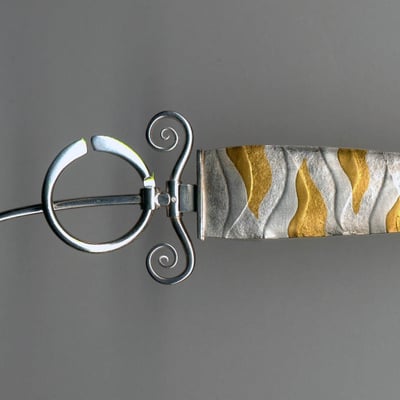
The last day of the course will focus on working with wires and on findings - such as earring fittings and clasps, which are important elements in jewellery making.You will learn a number of wire-working techniques to make decorative wire shapes to use in your jewellery. These skills will be used to learn how to make simple findings, such as clasps or ear wires yourself.
You will then learn how to use and solder shop-bought findings in your pieces and apply this knowledge in completing a pair of silver ear studs.
On this course the College will supply some of the materials, including:
Available from shop: Silver can be purchased from the College Shop which stocks a range of sheet, wire, rod, tube and findings. These will be available in set sizes and lengths suitable for a wide range of projects. The College Shop also stocks a selection of copper and brass sheet and wire, and a good variety of art materials, including paper and pencils.
Available from tutor: List items to buy from the tutor
Please wear appropriate clothing/aprons for the workshop or studio, this includes stout covered footwear (no sandals or open toes).
Arrival day - first date of course
Residential students can arrive from 4pm, non-residential students to arrive by 6.45pm for registration
Student welcome, followed by dinner: 6.45pm (dinner included)
Teaching session: 8pm-9pm (attendance is essential)
Daily timetable
Course teaching: 9.15am-5pm
Morning session: 9.15am-12.45pm including coffee/tea break
Lunch break: 12.45pm-2pm (lunch included)
Afternoon session: 2pm-5pm including coffee/tea break
Teaching finishes: 5pm
Evening working: students may have access to workshops until 9pm, but only with permission from the tutor and provided any health and safety guidelines are observed.
Departure day - last date of course
Course teaching: 9.15am-3pm (lunch included)
Teaching finishes: 3pm
Residential students will need to check out of rooms by 10am.
Please note, the tutor may make slight variations to the daily timetable as required.
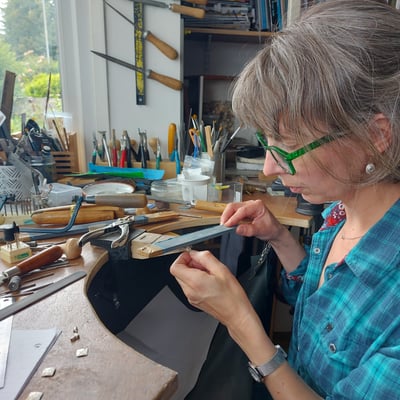
Hendrike graduated in jewellery design from Central St Martin’s in 1997.
Residential option available. Find out accommodation costs and how to book here.
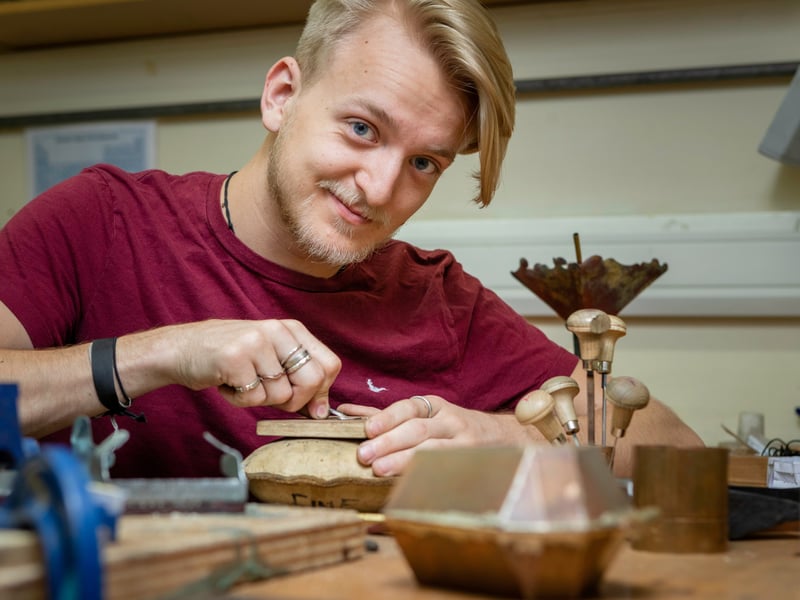
Our Foundation Degree in Metalwork will enhance your employment prospects, give you the skills to set up as a self-employed craftsperson or allow you to continue to higher education. Encompassing both silversmithing and blacksmithing, you will learn practical skills, material properties, placing your work in a broader context and historic metalworking techniques. Find out more