On this course, you will explore patterns and phenomena from the natural and mineral world and how you can translate these into stitch.
An example of such a pattern is branching, belonging to the fractal patterns. You can see this pattern in the branches of a tree, but also in the veins of a leaf, in a river estuary or in the bronchi. But there are other beautiful and intriguing patterns: crack patterns on tree bark, spiral patterns in pine cones, bubble patterns in insect wings, rotational symmetry in flowers and many more. They share certain characteristics that you can use to recreate such a pattern in stitch, without having to copy a specific object or scene.
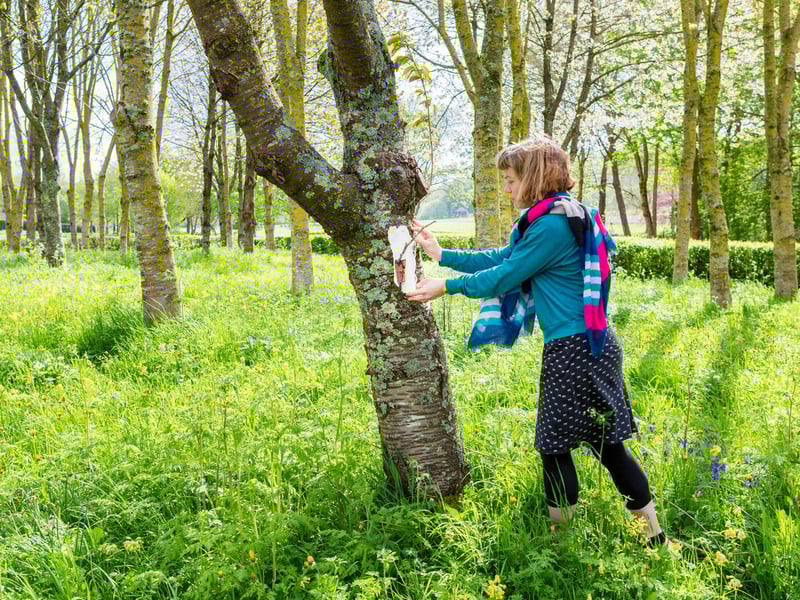
Each day, we will go outside and gather inspiration, taking photos or making sketches in the gardens and park surrounding West Dean College. If the weather does not permit us to go outside, the Internet can offer inspirational images too.
You will then explore these patterns in stitch, using basic stitches and techniques. The aim is not to replicate what you see exactly, but to develop your individual response to nature.
A piece of eco printed linen will be provided by the tutor as a starting point for your stitch explorations. The prints on the fabric form an ecosystem for your samples to grow in. In filling this fabric with samples of the patterns you have seen, you will experience the similarities between the stitch process and processes in nature. Your stitches will colonise the fabric, so to speak, much in the same way as plants or animals colonise their natural habitat. This sketchcloth, a contemporary take on the traditional sampler, will become a valuable reference piece and a way to develop your own organic style of embroidery.