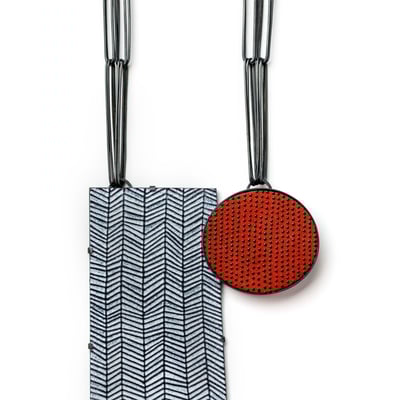
Sheila R McDonald
Shelia R Mcdonald is a graduate of Glasgow School of Art and the Royal College of Art. She works as a freelance jeweller and enameller, undertakes commissions and exhibits widely.
Ref: SSS39857
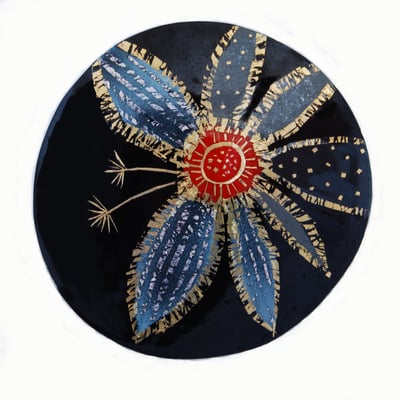
The aim of the course is to cover basic enamelling skills and to explore how colour, texture and design ideas can be interpreted in enamel, with an emphasis on imagery and effects.
As this is a fine enamelling course, you will experiment with the washing and grinding of enamels in preparation for wet packing; this allows much more scope for controlled and detailed work. You will also experiment with fine wirework (cloisonné), working with fine gold and silver foil, and direct drawing techniques with enamel pigment. Throughout the course, your tutor will demonstrate specific techniques, along with one-to-one tutoring.
Starting with a demonstration of the preparation and firing of enamels, you will work on a series of test pieces on copper. You will be provided with copper, some silver, enamels and foils and materials for these test pieces. Extra silver, brooch findings and foils will be available to purchase from the tutor.
This course is suitable for all, as most of the basic enamel techniques will be covered. Please come prepared to experiment with ideas, guided by the demonstrations and interaction with the other students on the course. The tutor will be on hand to deal with any technical difficulties that may arise.
By the end of the course, the aim is to produce a simple silver brooch which will encapsulate the Summer School Experience. Brooches are small, wearable works of art.
Summer School Highlights
The Summer School week is an immersive learning experience with more time to develop your creativity and embrace opportunities for creative development beyond your chosen course. A detailed timetable for your Summer School week will be given to you on arrival. This will include:
All lunches and evening meals are provided for residential and non-residential students during summer school due to planned activities/events in the early evenings.
On this course, the tutor will supply most of the materials, including some copper, small discs of silver, enamels and foils.
Gardens Gatehouse Craft Shop:
Available to buy from College Technicians:
Available from tutor:
Wear appropriate clothing/aprons for the workshop or studio, this includes stout covered footwear i.e. no open-toes or sandals.
Arrival day - first date of course
Residential students can arrive from 4pm, non-residential students to arrive by 6.45pm for registration
Student welcome, followed by dinner: 6.45pm (dinner included)
Teaching session: 8pm-9pm (attendance is essential)
Daily timetable
Course teaching: 9.15am-5pm
Morning session: 9.15am-12.45pm including coffee/tea break
Lunch break: 12.45pm-2pm (lunch included)
Afternoon session: 2pm-5pm including coffee/tea break
Teaching finishes: 5pm
Evening working: students may have access to workshops until 9pm, but only with permission from the tutor and provided any health and safety guidelines are observed.
Departure day - last date of course
Course teaching: 9.15am-3pm (lunch included)
Teaching finishes: 3pm
All lunches and evening meals are provided for residential and non-residential students during Summer School due to planned activities/events in the early evenings.
Residential students will need to check out of rooms by 10am.
Please note, the tutor may make slight variations to the daily timetable as required.
Several evening events are planned throughout the week, a detailed timetable for your Summer School will be given to you on arrival.
Shelia R Mcdonald is a graduate of Glasgow School of Art and the Royal College of Art. She works as a freelance jeweller and enameller, undertakes commissions and exhibits widely.
Residential option available. Find out accommodation costs and how to book here.
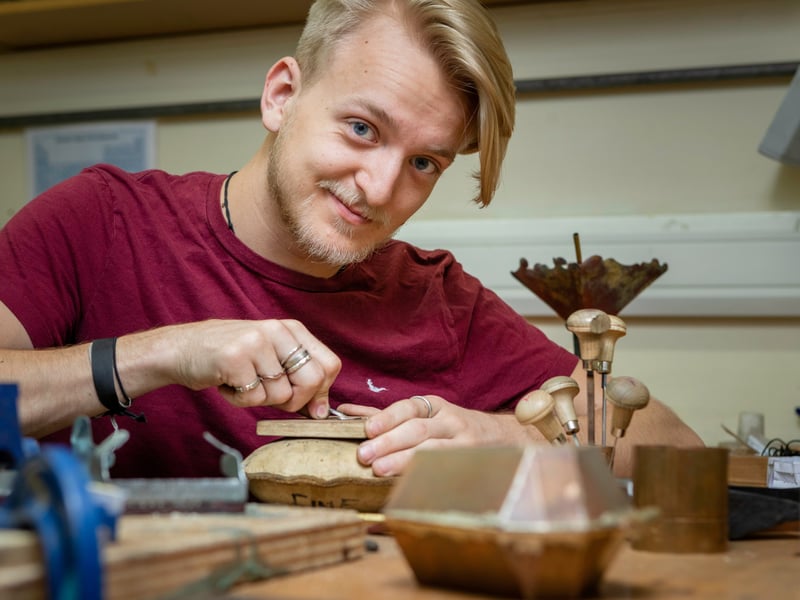
Our Foundation Degree in Metalwork will enhance your employment prospects, give you the skills to set up as a self-employed craftsperson or allow you to continue to higher education. Encompassing both silversmithing and blacksmithing, you will learn practical skills, material properties, placing your work in a broader context and historic metalworking techniques. Find out more