Life After Graduation: David Watkinson and the "Chancellor’s" Mystery Box
The French Polishers Magical Case!
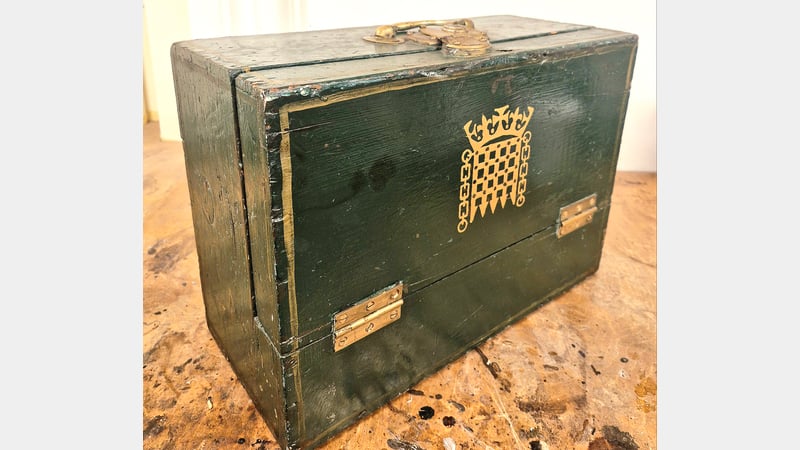
Having been seen carried around the Palace of Westminster for a good few years, many people have stopped and questioned me on what it is for, what's in it, and are you the chancellor?
Here are explanations and a deep dive into the contents. Work boxes and cases have been around for thousands of years, but a hundred and fifty years ago or so, peak 18th century, and the industrial revolution, cabinet maker, joiners, carpenters, woodworkers worldwide made their own, sometimes as an apprentice piece and other times as a test of their skill.
Some could be elaborate, but many simply functional and basic. This one, the latter, looking like the chancellor's budget box but in the green colour paint, gold banding made from pine, with dovetailed jointed ends for strength.
A brass carrying handle is fitted and some have the felt base covering also. Many are fitted with a removable try like this had in the beginning, but essentially empty with a section in the fold down front.
A standardised box really, that could be adapted for use by various trades such as a sign writer, polisher, shoeshine, or for marbling and graining.
It must hold a variety of things with the larger ones being bottles, tins, or containers. One a daily basis then inside it may contain some of the following items:-
Polish, which can be clear, tinted to give those areas a sealant and finish, stain to change the colour of the damaged wood, water lacquer for a different finish such as gloss, semi matt, or matt.
Brushes that are thin in shape called a pencil brush; bigger ones are called a mop. Waxes both hard and soft, these fill holes and provide a coat to finish and colour too. Rags, there can never have enough rags, sandpapers, spirit, water or oil stains, a knife for wax work, reviver for damaged polish, wire wool, tape for masking off areas of wood, and to cordon off the work, floor coverings, kneeling pad, apron, pigments, raw, pens, or mixed, gloves, mask, turps, note paper and pen. Round about twenty items that may be enough to complete the job or at least take it apart of the way and re-assess it for more things to use.
The history of this box goes back over forty years as a Polishing box but was only brought into Parliament for a change in the last two, it was just smarter looking than what had been around to use.
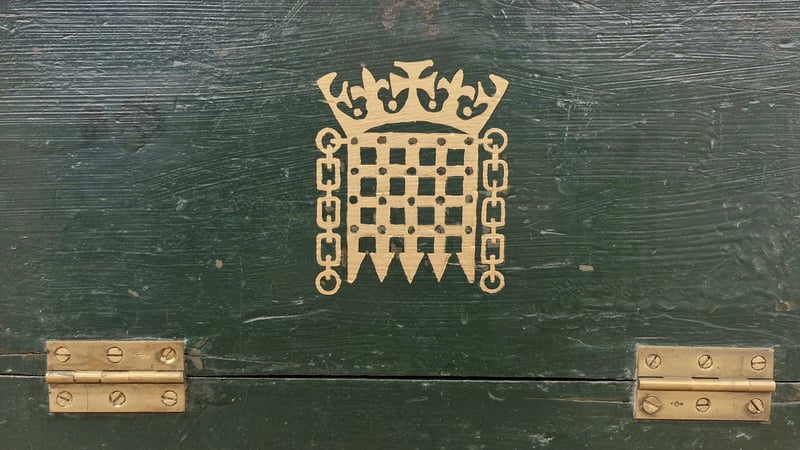
I made it even more fitting a few years ago, as I hand painted the portcullis onto it. It can be smelly once opened, but generally it has an aroma of wax, meths, and more which can be a pleasant heady mix, well that's what im told often as it wafts along the epic length of Committee corridor.
The amazing coincidence is that the painted green colour, and the gold lined edges was originally done all those decades ago, long before I ever knew I would be in the Houses of Parliament, and of course fitting the Commons colour pallet for the house! Life can be funny sometimes, is it all planned out? Anyway, it blends in so well.
Now you know the inner secrets of the French Polishers Case, but I sincerely hope it remains a little bit of an enigma though, as its kind of endearing, being an old craft in a world of screens, and phones.
I think it will be a long while before we see an Elon Musk AI Polishing robot walking around the Palace of Westminster, so for now, I'll carry on polishing, signing off with the age old saying, "wax on, wax off".
- By School of Conservation alumnus, David Watkinson