Allan Brown
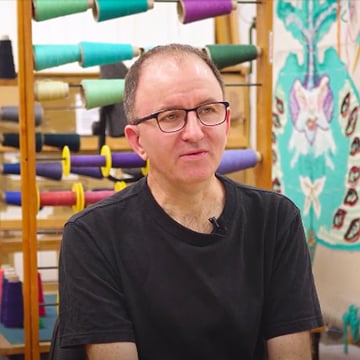
Allan is a weaver, spinner, and dyer with a focus on sustainability, traditional crafts and natural fibres, notably nettles, flax, hemp and wool.
Ref: S3D40208
West Dean Heritage Craft Week Immerse yourself in the rich traditions of heritage crafts with our Heritage Craft Week and learn time-honoured techniques from expert instructors. Whether you're a beginner eager to explore a new craft or an experienced artisan looking to refine your skills, you'll not only acquire practical skills but also connect with a deeper sense of history and craftsmanship.
On this course we will learn about two of our traditional European bast fibres, namely flax and nettles, how they are grown or gathered and how to extract and process their fibres. As well as the practicalities of growing and foraging these plants, we will learn about their long history and use in the UK, the folklore and mythology that surrounds them and the increasing role they will play in the future.
We will learn to twist simple cordage from the fibres and how to make primitive rope, laying the foundation for the spinning of yarn on drop spindles. We will learn to spin using wool as well the bast fibres we have extracted from the plants as well as some commercially grown flax fibre.
We spend a full day on flax; learning how to source seed, how and where to grow it, when to harvest it, the drying, the storing and the art of retting flax. We will then take retted flax stalks through the processing stages, learning and practically doing the breaking, scutching, hackling of the fibres. We will discuss ‘tow’, the shorter fibres, and how best to prepare and spin those, as well as the fine, long ‘line fibres’ which will need to be spun from distaffs. By the end of the day, you will be spinning both flax ‘tow’ and the long ‘line fibres into linen threads.
We will spend the second day specifically on nettles and look at various methods for extracting the fibre and follow the steps necessary to take it from living plant through to spun thread and woven cloth. We will handle samples and examples of nettle yarn and cloth and yarn as well as looking at Himalayan Nettle and the Nepalese nettle tradition. By the end of the day, you will have created your own nettle thread from foraged nettles.
By the end of the course, students will have a thorough understanding of these fibre, food and medicinal plants and have gained the knowledge and confidence to forage nettles and grow their own flax and to take it from plant right through to spun fibre ready for weaving, knitting, basketry and macramé.
Please note that this course will be held in the sculpture courtyard, not in the house studios. The courtyard is located on the same side as the West Dean Gardens entrance, about an eight-minute walk from the main house reception.
On this course the tutor will supply all of the materials used, including flax and nettles. West Dean will supplement the course with additional spinning wheels and carding brushes to use during the course.
Please wear appropriate clothing/aprons for the workshop or studio, this includes stout covered footwear (no sandals or open toes). Possible equipment restrictions in tutor absence.
Arrival day - first date of course
Residential students can arrive from 4pm, non-residential students to arrive by 6.45pm for registration
Student welcome, followed by dinner: 6.45pm (dinner included)
Teaching session: 8pm-9pm (attendance is essential)
Daily timetable
Course teaching: 9.15am-5pm
Morning session: 9.15am-12.45pm including coffee/tea break
Lunch break: 12.45pm-2pm (lunch included)
Afternoon session: 2pm-5pm including coffee/tea break
Teaching finishes: 5pm
Evening working: students may have access to workshops until 9pm, but only with permission from the tutor and provided any health and safety guidelines are observed.
Departure day - last date of course
Course teaching: 9.15am-3pm (lunch included)
Teaching finishes: 3pm
Residential students will need to check out of rooms by 10am.
Please note, the tutor may make slight variations to the daily timetable as required.
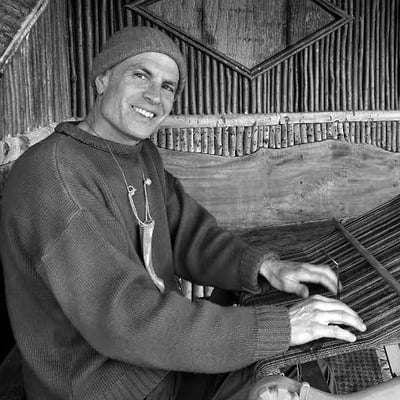
Allan is a weaver, spinner, and dyer with a focus on sustainability, traditional crafts and natural fibres, notably nettles, flax, hemp and wool.
Residential option available. Find out accommodation costs and how to book here.
Take the next step in your creative practice, with foundation level to Masters in Fine Art study.
Depending on your experience, start with an Online Foundation Certificate in Art and Design (one year, part-time), a Foundation Diploma in Art and Design made up of 10 short courses taken over two years (part-time) or advance your learning with our BA (Hons) Art and Contemporary Craft: Materials, Making, and Place (six years part-time). All will help you develop core skills, find direction in your practice and build an impressive portfolio in preparation for artist opportunities or higher-level study. See all degree and diploma courses.