Printing techniques for ceramic surfaces with Claire Ireland
Ref: SLW40278
About this course
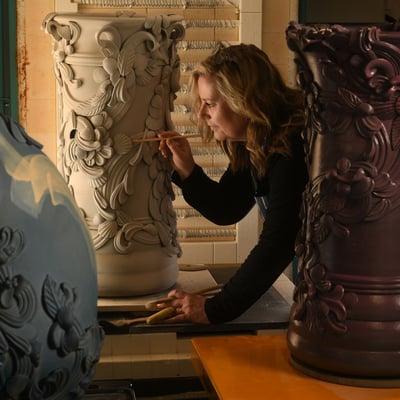
Discover the delights of printing on clay. An opportunity to experiment with a variety of decorative methods that use colour to print and transfer images, creating a diversity of dynamic surfaces.
Course Description
This course provides an experimental approach to surface decoration, with an emphasis on printing and embossing techniques. What is so versatile about printing methods that are traditionally used on paper is that they can be adapted to print colour, slip or glaze onto a clay surface.
You will be introduced to an inventive approach to silkscreening, printing with a homemade screen and simple paper stencils, using porcelain paperclay slip to transfer the images. Learn how to prepare transfer sheets by printing with sponge stamps, painting gestural marks or silk-screening liquid underglaze colours onto newsprint. The transfer sheets can be stored away for future use but can be cut and torn into sections, creating a collaged image. This technique can be used in combination with Tyvek paper stencils to create an embossed surface.
Printing with dust is an alternative method of printmaking, and, for this technique, you will use clay, pigment or glaze in a powdered form. This can be scattered or sieved, creating a decorative layer which can be applied directly to the clay and embedded into the surface. You will also learn a more flexible and gestural approach where the soft clay is applied to a dust print created on a wooden surface. A selection of stamps made in a variety of ways will be on display to guide you to build your own collection using different materials.
By the end of the course, you will have started to build a repertoire of techniques, producing a selection of samples, fragments and test tiles. This also can take the form of small shallow vessels which can be made in different clays. Advice will be given on display, presenting your experiments and glazing options.
Course Materials
Included
On this course the tutor will supply handouts - notes of all techniques covered in the workshop. She will also have available some completed test samples of all the decorative techniques explored, and a selection of found objects, mixed media and fragments of texture.
The College will supply all of the materials, including all the equipment required: clay, colours and slip, with tools and paintbrushes available for use on the course.
What students need to bring
- Sketchbook
- An apron and covered footwear
- Pottery tools if you have them (mark with your name) and small fragments of mixed media and found objects to make stamps
Preparation: Research ideas and collect or draw a selection of patterns and designs looking at graphics, illustration, prints, textiles, jewellery - and artists or makers that inspire you. This can be from Instagram, Pinterest, websites, books, postcards or exhibitions
Available to buy
Available from shop:
- Sketchbooks, brushes and a selection of tools, if required in addition to those supplied.
Additional information
Firing and glazing options:
- Leave any raw, finished pieces, which you wish to keep, for biscuit firing, basic glazing and re-firing by the College for collection within six months.
- Take away your unfired pots for firing and glazing elsewhere.
- Wear appropriate clothing - aprons in the studio, this includes stout covered footwear i.e. no open-toes or sandals.
Timetable
Arrival day - first date of course
Residential students can arrive from 4pm, non-residential students to arrive by 6.45pm for registration
Student welcome, followed by dinner: 6.45pm (dinner included)
Teaching session: 8pm-9pm (attendance is essential)
Daily timetable
Course teaching: 9.15am-5pm
Morning session: 9.15am-12.45pm including coffee/tea break
Lunch break: 12.45pm-2pm (lunch included)
Afternoon session: 2pm-5pm including coffee/tea break
Teaching finishes: 5pm
Evening working: students may have access to workshops until 9pm, but only with permission from the tutor and provided any health and safety guidelines are observed.
Departure day - last date of course
Course teaching: 9.15am-3pm (lunch included)
Teaching finishes: 3pm
Residential students will need to check out of rooms by 10am.
Please note, the tutor may make slight variations to the daily timetable as required.
General Information
Tutors
Accommodation
Residential option available. Find out accommodation costs and how to book here.
Further study options
Take the next step in your creative practice, with foundation level to Masters in Fine Art study.
Depending on your experience, start with an Online Foundation Certificate in Art and Design (one year, part-time), a Foundation Diploma in Art and Design made up of 10 short courses taken over two years (part-time) or advance your learning with our BA (Hons) Art and Contemporary Craft: Materials, Making, and Place (six years part-time). All will help you develop core skills, find direction in your practice and build an impressive portfolio in preparation for artist opportunities or higher-level study. See all degree and diploma courses.