Monday 1 June
4pm-6pm: Register at Reception Desk
6.45pm:Welcome Talk
7pm:Dinner
8pm: Introduction Lecture
Tuesday 2 June
9am: Conservation and understanding tiling: How tiled roofs work; single lap fixed gauge and variable gauge; overs and unders; tegula and imbrex; double lap plain tiles; evolution from vernacular to modern.
Sorting tiles to understand the difference between hand-made and machine-made tiles.
Lecture: Regional roof types; materials - types of clays and different styles of clay tiles and formats. Guides and codes of practice etc; British/European standards.
Clay tile production. Big production machine-made v hand-made manufacturing.
4.30pm: Recording a vernacular tiled roof.
7pm-7.45pm: Dinner
Wednesday 3 June
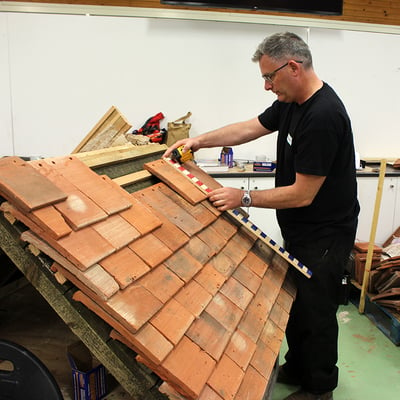
9am: Setting out for fixed gauge and variable gauge large format clay tiles. Overs and unders, tegulas and imbrex. Hand-made plain tiles v modern machine-made.
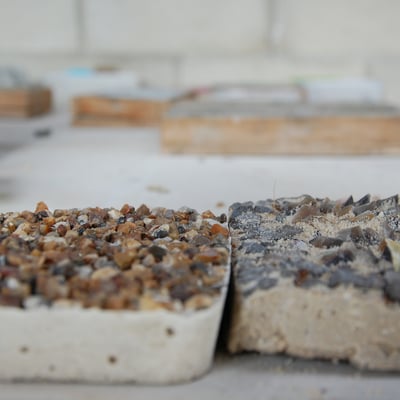
Practical- Mortars
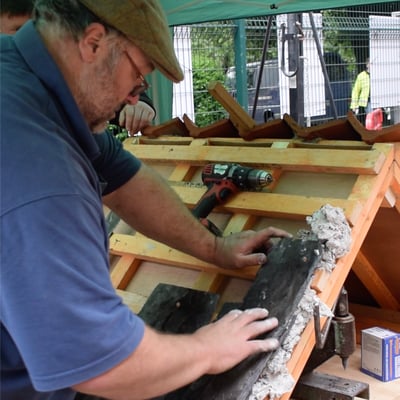
4pm-5.30pm: Gauging tiled roofs; battening, setting out a roof for swept laced PMV and lead valleys. Start to tile the rigs using machine-made tiles and/or hand-made tiles.
7pm-7.45pm: Dinner
Thursday 4 June
9am: Tiling the roof using modern and hand-made plain tiles to the four areas to include valleys. Recording the roofs and presenting the findings of the tiled roof recordings.
3.30pm-4pm: Issue of certificates and depart.