John Mosse
John Mosse is an award-winning blacksmith and conservator. He trained in the national school of Blacksmithing Hereford, before undergoing a masters in Conservation of metalwork at West Dean College.
Ref: S1D40046
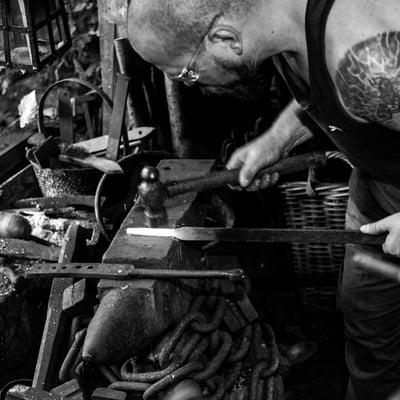
The process of hot forging iron dates back around 3,000 years. Over this time, the uses, styles, technology and materials used have developed. However, the process of forming hot iron into shape using a hammer and anvil is as fundamental now as it has always been.
In this experience day, you will be shown the tools and equipment of a traditional forge, using a solid fuel hearth and hand tools to create an object of your choosing.
The aim will be for you to learn the basic skills required to get you started, should you wish to continue your journey as a blacksmith, and for you to ask any questions you wish to know about the trade.
On this course, the College will supply all the materials: steel, fuel and hand tools (files, rasps, etc.).
You will need clothing suitable for workshop use, together with steel toe capped boots. Please note that cotton or woollen clothing is preferable to nylon or other synthetics. A pair of cotton jeans is far more protective than a pair of nylon trousers. Shorts do not provide necessary protection. For your safety, it is mandatory to wear steel toe capped safety boots when undertaking a course in the Forge. You must provide your own footwear and bring it with you to wear on the course. If you fail to bring suitable footwear, you will not be able to take part in the course. Safety boots can be purchased from most tool hire shops and builders merchants, as well as online.
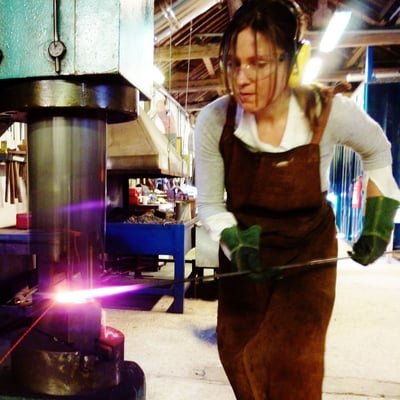
You must wear goggles (provided) and suitable protective clothing for this course. Leather aprons, welding gauntlets, goggles, welding helmets and ear defenders can be borrowed from the Forge or you can bring them along if you have them. If, for example, you have particularly large or small hands, your own leather work gloves are likely to be a better fit.
Please note: Your workshop will be in the Forge, which is a ten-minute walk from the main house through the walled garden or can be accessed by car. You should arrive by 9am for registration at the Main House, to ensure you can walk/be directed over to the forge for a 9:30am start. As this course is held in the Forge, morning coffee and afternoon tea are held in the nearby Carrington Studio.
Please note that tutor supervision is always required when you are working in the Forge.
Please wear appropriate clothing/aprons for the workshop or studio. This includes stout covered footwear, i.e. no open-toes or sandals, and safety boots, if specified.
Student registration: 9am-9.30am (The registration is at the main house, which is a ten-minute walk to the Forge)
Course teaching: 9.30am-5pm
Morning session: 9.30am-1pm
Lunch break: 1pm-2pm (lunch included)
Afternoon session: 2pm-5pm
Teaching finishes: 5pm

John Mosse is an award-winning blacksmith and conservator. He trained in the national school of Blacksmithing Hereford, before undergoing a masters in Conservation of metalwork at West Dean College.
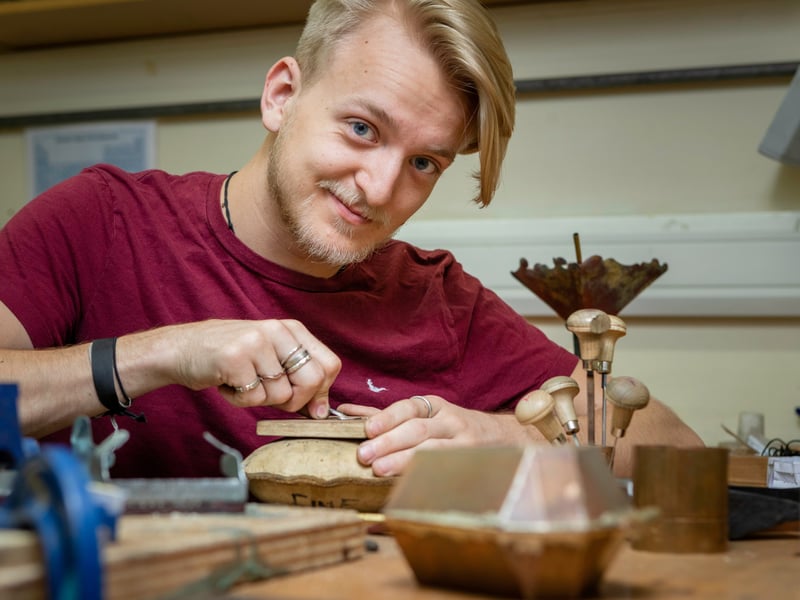
Our Foundation Degree in Metalwork will enhance your employment prospects, give you the skills to set up as a self-employed craftsperson or allow you to continue to higher education. Encompassing both silversmithing and blacksmithing, you will learn practical skills, material properties, placing your work in a broader context and historic metalworking techniques. Find out more