This course is part of our Making Skills: for Degree and Diploma Study, a themed series of short courses that teach foundation skills and offer an insight into studying one of our Higher Education courses at West Dean.
They cover a variety of subject areas and are taught by selected tutors who teach on the Degree and Diploma courses at West Dean, giving students a real insight into the opportunities available for full or part time study. They also offer an excellent opportunity to create and build on your portfolio, often a key requirement when you apply for a higher education programme, develop you practical making skills and find out if you would like to pursue further study.
There will also be opportunities to Meet the Tutors on Tuesday 8 September, with an evening event starting at 5:15pm in The Old Library, where each tutor will give a 10 minute talk about their practice and course. Workshop and studio tours will also be scheduled as part of the week, offering students the chance to see the full range of facilities and courses West Dean offers.
Course details
The focus of this painting course is the fifteen huge carved chalk stones created by Andy Goldsworthy in 2002 that follow a 5-mile trail from Cocking to West Dean College.
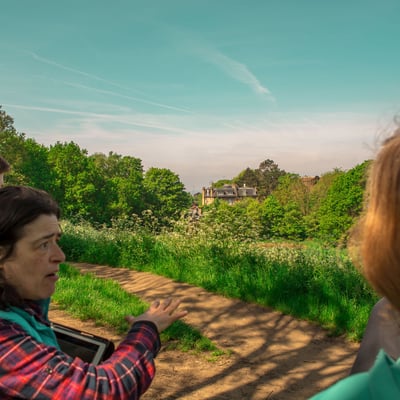
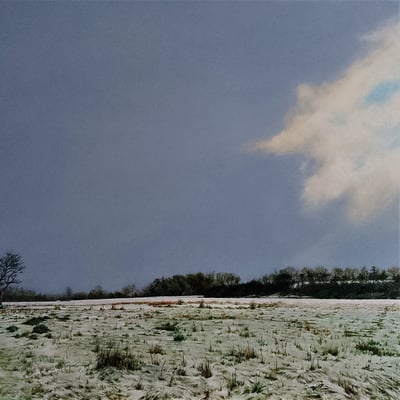
The trail is distributed along a network of Public Rights of Way, moving through West Dean woods via a combination of footpaths, bridleways and byways. Following the route takes you through rich countryside, including managed fields and woodlands, forests of larch and beech, hazel coppices, as well as designated nature reserves and open farmland. Climbing to various peaks along the Downs, there are views not only from West Dean but of the Cowdray Estate to the north. (Dixon, 2002)
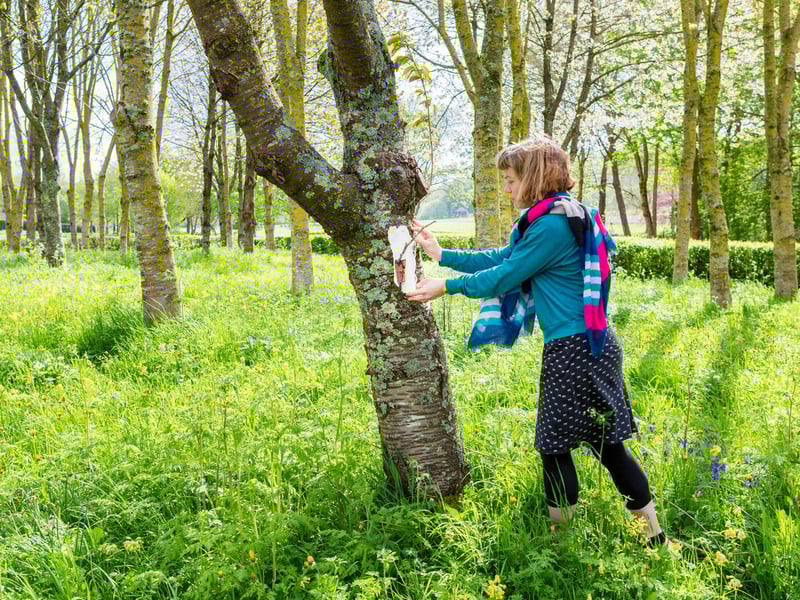
The college minibus will drop us at the first chalk stone in Cocking from where we will spend the rest of the day walking back to West Dean College, spending time at each of the chalk stones to paint/draw/photograph/write. Gathering reconnaissance material, which will be used to make paintings in the studio over the following days.
The introduction of manmade features into the landscape offers a surreal implication. Huge chalk stones, echoing the shape of the moon, placed in woodland, farmland and manicured gardens, how do they relate? What are they saying? How can you make sense of these very different landscapes in the twenty-first century?
Throughout the course you will be introduced to artists including Paul Nash, Edward Burra, Ben Deakin, Ben Edge, Harold Mockford and Flora McLachlan, all of whom bring to the attention esoteric detail, a sense of time and space, the weird and eerie by forging echoes of the past through painting the landscape.
For this course, you will need to be able to walk 5 miles over the course of the day. You will be dropped at Cocking after breakfast by minibus and walk back to the College throughout the day. We advise comfortable walking equipment, including a rucksack, portable art materials, water bottle, carrier bag to sit on or portable stool, warm clothing and camera. You will be carrying your art materials and equipment with you, along with the picnic provided for lunch. You will be back in time for supper.
The emphasis on the course is the slow act of walking and painting, as well as being in nature, mindful of continuity observed through the cycles of the sun and the moon, the chalk stones symbolising the moon.
Making Skills: for Degree and Diploma Study
Other subjects and short courses on this themed week are:
Printmaking: Combined Techniques
Attendance on the above course offers skills relevant to progressing onto Foundation Diploma in Printmaking
Tapestry Weaving: The Art of Translation
Attendance on the above course offers skills relevant to progressing onto Foundation Diploma in Tapestry
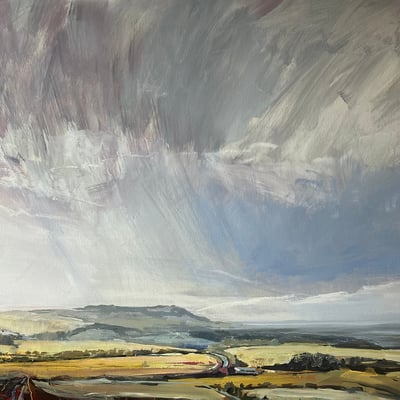
Painting Inspired by Goldsworthy’s Chalk Stone Walk
Attendance on the above course offers skills relevant to progressing onto Foundation Diploma in Art & Design and BA (Hons) Art & Contemporary Craft
Textiles - Techniques to Tell Stories and Experimental Concrete Casting for Sculpture
Attendance on any of the above courses offers skills relevant to progressing onto BA (Hons) Art & Contemporary Craft
Printmaking: Combined Techniques, Experimental Concrete Casting for Sculpture and Tapestry Weaving: The Art of Translation
Attendance on any of the above courses offers skills relevant to progressing onto Graduate Diploma Fine Art and MFA Fine Art
Silversmithing with an Emphasis on Box Making and Blacksmithing: Fundamentals and Individual Projects
Attendance on any of the above courses offers skills relevant to progressing onto FdA Metalwork (Craft Practices)
Woodworking: Tool Control, Posture and Precision
Attendance on the above course offers skills relevant to progressing onto FdA Furniture (Craft Practices)
Bookbinding Sampler: Designing and Creating a Sewn Notebook and Introduction to the Conservation of Books and Archives
Attendance on any of the above courses offers skills relevant to progressing onto FdA Books & Bindings (Craft Practices)
Introduction to the Conservation of Books and Archives
Attendance on the above course offers skills relevant to progressing onto Graduate Diploma Conservation and MA Conservation
Practical Skills in Conservation
Attendance on the above course offers skills relevant to progressing onto Graduate Diploma Conservation
Interior Design Intensive – Process, Planning and Presentation
Attendance on the above course offers skills relevant to progressing onto BA (Hons) Interior Design and HE Diploma Interior Design
Find out more and View all Courses