This course is part of our Making Skills: for Degree and Diploma Study, a themed series of short courses that teach foundation skills and offer an insight into studying one of our Higher Education courses at West Dean.
They cover a variety of subject areas and are taught by selected tutors who teach on the Degree and Diploma courses at West Dean, giving students a real insight into the opportunities available for full or part time study. They also offer an excellent opportunity to create and build on your portfolio, often a key requirement when you apply for a higher education programme, develop you practical making skills and find out if you would like to pursue further study.
There will also be opportunities to Meet the Tutors on Tuesday 8 September, with an evening event starting at 5:15pm in The Old Library, where each tutor will give a 10 minute talk about their practice and course. Workshop and studio tours will also be scheduled as part of the week, offering students the chance to see the full range of facilities and courses West Dean offers.
Course details
This course takes inspiration from Edward James experimental concrete sculptures at Las Pozas in Mexico and introduces you to creative approaches to concrete casting for contemporary sculptural practice.
You will begin with an illustrated introduction to the historical and artistic context of concrete casting and Edward James visionary sculpture garden. Drawing on his PhD research and visits to Las Pozas in 2015 and 2023, the tutor will support you through discussion and practical exercises that explore concrete as a sculptural medium.
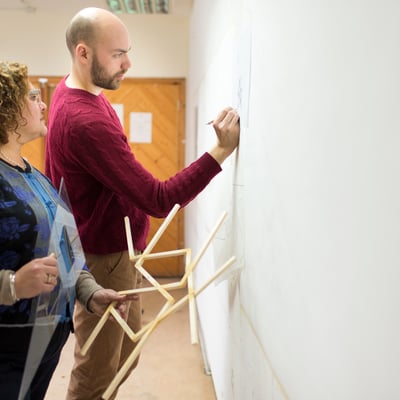
You will develop a series of observational and imaginative sketches inspired by the West Dean surroundings. Through group discussion and critique, these drawings will be refined into plan drawings that inform the construction of formwork moulds using timber and other materials. Practical sessions will focus on building moulds, preparing and mixing concrete, and experimenting with casting techniques.
You will explore a range of experimental approaches including the use of colour pigments and aggregates, working with repeated forms, techniques of reinforcement, and the possibilities of fabric mould making. Technical instruction will be balanced with creative exploration, allowing you to respond to your own interests and sculptural ideas.
By the end of the course, you will have gained skills in observational and technical drawing, as well as woodwork and model-making through the development of moulds. You will also become familiar with basic concrete mixing and casting processes, giving you increased confidence to employ these techniques within your own sculptural practice.
Working with concrete can be physically demanding and may not be suitable for those with medical conditions that restrict heavy lifting or the use of power tools. To succeed on this course, you should have basic woodwork skills and some experience using hand tools, including a hand saw, electric jigsaw, cordless drill and hammer. If you are willing to learn and use these tools, you may still be able to join the course please check with the course programmer.
Making Skills: for Degree and Diploma Study
Other subjects and short courses on this themed week are:
Printmaking: Combined Techniques
Attendance on the above course offers skills relevant to progressing onto Foundation Diploma in Printmaking
Tapestry Weaving: The Art of Translation
Attendance on the above course offers skills relevant to progressing onto Foundation Diploma in Tapestry
Painting Inspired by Goldsworthy’s Chalk Stone Walk
Attendance on the above course offers skills relevant to progressing onto Foundation Diploma in Art & Design and BA (Hons) Art & Contemporary Craft
Textiles - Techniques to Tell Stories and Experimental Concrete Casting for Sculpture
Attendance on any of the above courses offers skills relevant to progressing onto BA (Hons) Art & Contemporary Craft
Printmaking: Combined Techniques, Experimental Concrete Casting for Sculpture and Tapestry Weaving: The Art of Translation
Attendance on any of the above courses offers skills relevant to progressing onto Graduate Diploma Fine Art and MFA Fine Art
Silversmithing with an Emphasis on Box Making and Blacksmithing: Fundamentals and Individual Projects
Attendance on any of the above courses offers skills relevant to progressing onto FdA Metalwork (Craft Practices)
Woodworking: Tool Control, Posture and Precision
Attendance on the above course offers skills relevant to progressing onto FdA Furniture (Craft Practices)
Bookbinding Sampler: Designing and Creating a Sewn Notebook and Introduction to the Conservation of Books and Archives
Attendance on any of the above courses offers skills relevant to progressing onto FdA Books & Bindings (Craft Practices)
Introduction to the Conservation of Books and Archives
Attendance on the above course offers skills relevant to progressing onto Graduate Diploma Conservation and MA Conservation
Practical Skills in Conservation
Attendance on the above course offers skills relevant to progressing onto Graduate Diploma Conservation
Interior Design Intensive – Process, Planning and Presentation
Attendance on the above course offers skills relevant to progressing onto BA (Hons) Interior Design and HE Diploma Interior Design
Find out more and View all Courses