Ben Brierley
Ben has had articles published widely and is the author of “Firing kilns”.
Ref: S5D40319
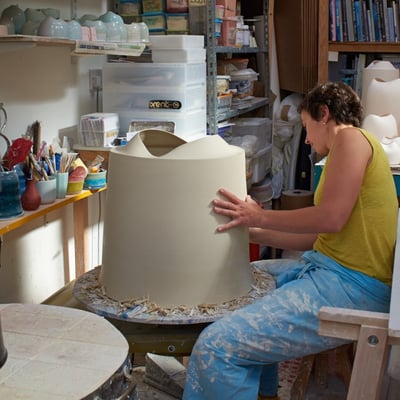
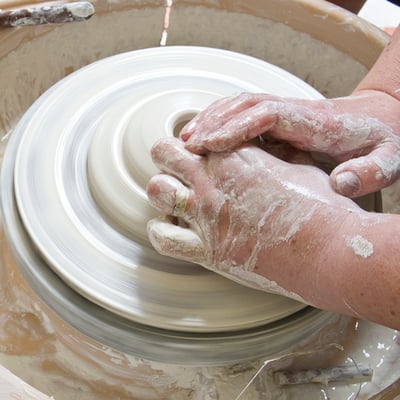
The aim is to encourage you to work creatively and sustainably with clay, working with expressive throwing or handbuilding, or a combination of techniques, to explore the vessel form. You will understand building skills and the materials required to build a cost efficient kiln, capable of being fired on reclaimed wood. This course will demystify the practice of kiln design and construction, and will explore kiln design options. You will also develop an understanding of how to efficiently pack a small kiln for any type of firing and how to fire a small woodfired kiln upto high earthenware temperatures.
Objectives:
Outcomes:
Immersive Art School Week
This course is part of our ‘Immersive Art School’ group of short courses for summer 2026, led by talented artist-tutors.
There will be tutor talks on Tuesday evening from 5:15 to 6.15pm in The Old Library as part of the course. Studio visits are encouraged to share work and experiences (out of core teaching hours).
PLEASE NOTE: Building and firing the wood-fired kiln is a very physical activity, and all students are expected to help with this part of the process. It may involve an early start or evening finish. Also, the course takes place on two sites: the ceramics studio in the main building for making, and the firing in the Sculpture Courtyard, a 10 minute walk across the gardens. It will involve walking back and forth to the kiln site and standing around. Alternatively, you may drive your car around to the Sculpture Courtyard, if you prefer.
On this course the College will supply red terracotta clay, slips, glaze and firing wood, which are included in the course fee.
Available from shop:
Please wear appropriate clothing/aprons for the workshop or studio, this includes stout covered footwear (no sandals or open toes).
Arrival day - first date of course
Residential students can arrive from 4pm, non-residential students to arrive by 6.45pm for registration
Student welcome, followed by dinner: 6.45pm (dinner included)
Teaching session: 8pm-9pm (attendance is essential)
Daily timetable
Course teaching: 9.15am-5pm
Morning session: 9.15am-12.45pm including coffee/tea break
Lunch break: 12.45pm-2pm (lunch included)
Afternoon session: 2pm-5pm including coffee/tea break
Teaching finishes: 5pm
Evening working: students may have access to workshops until 9pm, but only with permission from the tutor and provided any health and safety guidelines are observed.
Departure day - last date of course
Course teaching: 9.15am-3pm (lunch included)
Teaching finishes: 3pm
Residential students will need to check out of rooms by 10am.
Please note, the tutor may make slight variations to the daily timetable as required.
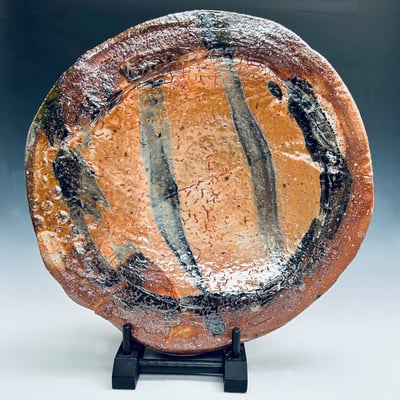
Ben has had articles published widely and is the author of “Firing kilns”.
Residential option available. Find out accommodation costs and how to book here.
Take the next step in your creative practice, with foundation level to Masters in Fine Art study.
Depending on your experience, start with an Online Foundation Certificate in Art and Design (one year, part-time), a Foundation Diploma in Art and Design made up of 10 short courses taken over two years (part-time) or advance your learning with our BA (Hons) Art and Contemporary Craft: Materials, Making, and Place (six years part-time). All will help you develop core skills, find direction in your practice and build an impressive portfolio in preparation for artist opportunities or higher-level study. See all degree and diploma courses.