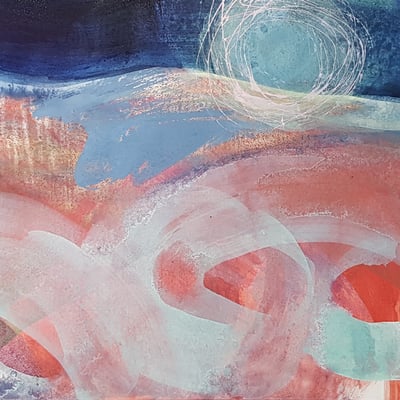
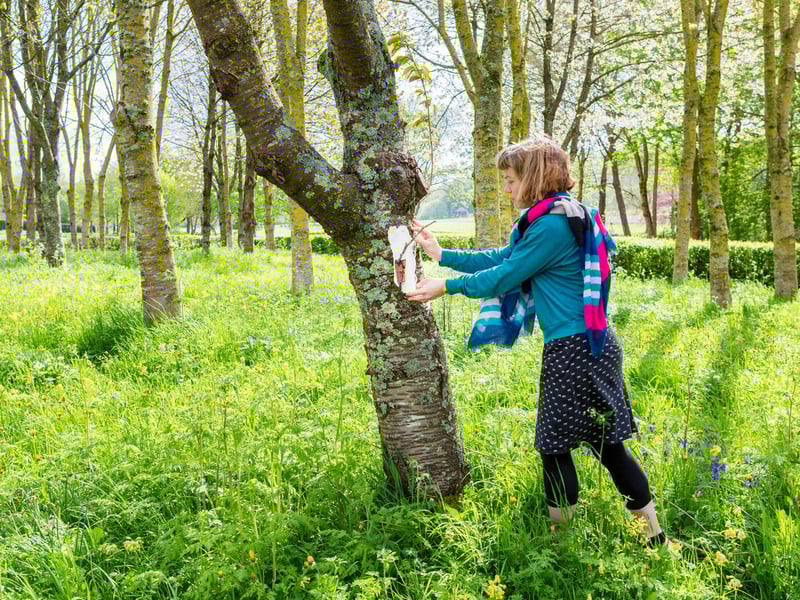
Still life could be thought of as a kind of testing ground for ideas and approaches to painting. The still life is, after all, a subject constructed with artmaking specifically in mind. This course is about going beyond representation, by exploring how the processes of drawing, collage and painting enable you to see your subject afresh and give you confidence to strip away the superfluous and reveal the essential. The aim is to produce several works in series, enabling comparative judgements to be made and learning to be clearly achieved.
Abstraction is a broad and slippery term, but through daily slide shows looking at the historical development of abstraction from still life, a clear path from Paul Cezanne, through Cubism and the works of St Ives artists to the present day, will be charted.
Acrylics are preferred due to their fast-drying qualities and their compatibility with other water-based mediums, PVA and collage.
Day 1: You will be making observational drawings with charcoal, cloth and eraser from elements of the still life. Simplification of form and focusing on specific visual qualities will produce images that transform the subject and reveal new possibilities. Editing, materials handling and mark quality, composition, space and pattern will be key components of the day.
Day 2: Working with paper that you have coloured at the beginning of the day, you will make collages in response to both the still life and the drawings of the previous day. Collage will allow a new focus on shape and edge qualities, placement and compositional decision making and maintaining clarity and simplicity. The relationship between collage, still life and abstraction in the works of Pablo Picasso, Georges Braque and Ben Nicholson will be examined.
Day 3: With your studies as a starting point, you will continue the process of abstraction through the production of a series of ten small paintings on board, which you will work on for the remainder of the course, exploring the material and handling properties of paint, only using the actual still life for occasional reference, if at all. You will push the simplification of form to line, stripe, block and blob, as in the works of artists such as Nicolas de Staël, Patrick Heron and William Scott. The work will progress with the help of comparative critical judgements, made possible by working in series. Individual support and evaluation will be provided at key points.
Day 4: You will spend the day working on your increasingly resolved series of ten paintings. Importantly, you will learn how to make dramatic and substantial changes to paintings whilst maintaining freshness and simplicity. The principle of holding onto your best work whilst taking risks with your worst will be established. The tutor will provide individual support with evaluations and discussions at key points.
Day 5: In the morning, you will continue to develop your paintings, holding onto the successes and taking risks with the less so. After lunch, we will put up a display of works and finish with a group evaluation.