Aims: to gain competence in at least one weaving technique; to explore the material of willow; to create a functional basket to take home.
Objectives: to observe and practice the following techniques: pairing; staking up; waling; randing
Outcomes: increased confidence using the material; a functional handmade basket; an enjoyable experience of working with manual skills.
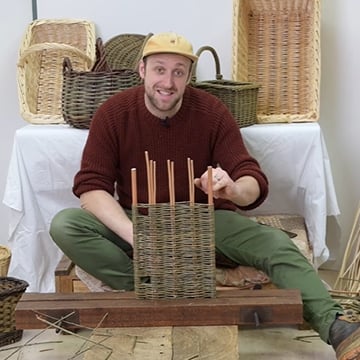
The first day will be spent getting to know the material and tools, selecting materials for the base, using a bodkin and a pairing weave to ‘tie in the slath’. We will have time to make at least two bases, consolidating our skills and improving technique as we go. In the afternoon we will select the most successful base (bearing in mind that a basket is only ever as good as the base) and take time to carefully select materials for the stakes (uprights). We will then ‘slype’ the ‘butt ends’ of the stake rods and insert them using a bodkin into the base, ‘pricking up’ with a knife. We will then secure a hoop over the stakes ready for weaving on day-two.
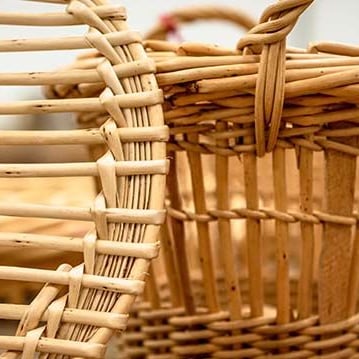
The second day will commence once more by selecting material appropriate for weaving the sides. The first technique covered will be a three-rod wale to form the ‘upset’ and set the stakes in regular intervals for the next stage of weaving. After a few rows of waling, we select best material for the ‘randing’ weave. We will then use English randing for the sides, tapping down the weaving with a ‘rapping iron’, and ending with a top wale. Finally, after lunch we will complete our baskets with a ‘5 behind 2’ rod border, something that needs time, concentration, and a fair bit of patience! The work is completed by ‘picking off’ (trimming the ends) with secateurs, and an appraisal at the end.