Eco-dyeing and printing with plants with Nawal Gebreel

Ref: SWE41020

Places available

About this course

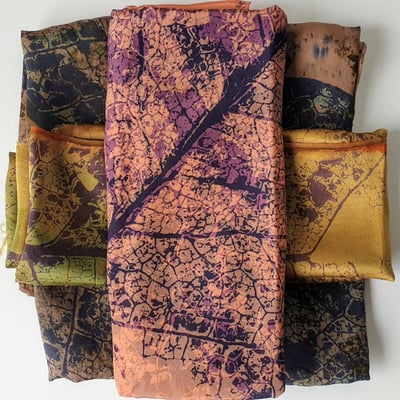
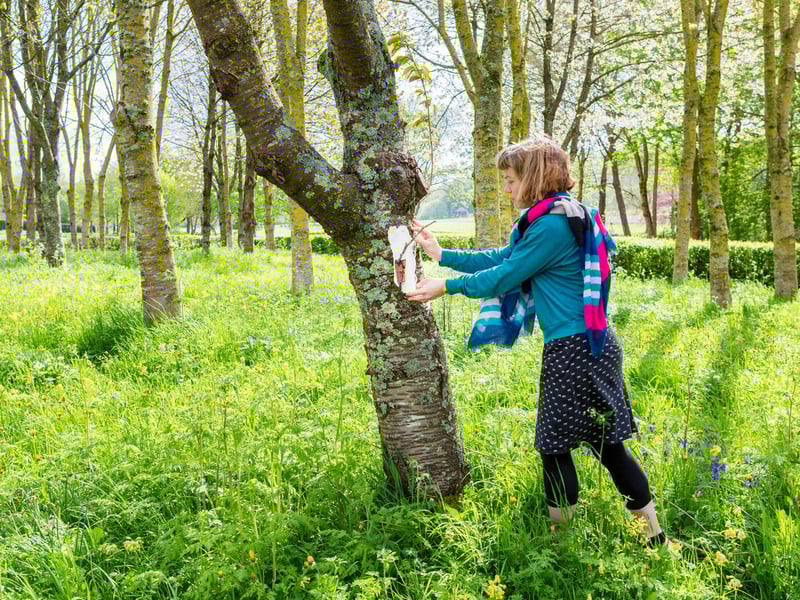
Learn how to eco-dye and print on paper and fabric. Using flowers and leaves gathered directly from the garden, make a series of decorative papers and patterned natural fabrics.

Course Description

Contact printing using plant materials is often called eco-printing. You will use this method to make framable prints from plants. You will learn how to identify and gather the necessary flowers and leaves from the College’s cutting garden, and together, with guidance, you will use tools and equipment to experiment with different processing methods to grasp the basics of eco-printing and dyeing.

On the first evening, you will learn how to prepare and mordant the fabric ready for dyeing and printing.

The next day, you will learn different techniques for printing on paper, and the day after, you will experiment with eco-dyeing on natural silk and use cotton fabrics as a blanket. You will learn printing techniques with leaves and incorporate a simple shibori pattern (time permitting). You can also opt to make a simple notebook, using the decorative paper that you printed on during the first day.

You will also be shown how to take your prints further by adding some drawing and painting.

You should leave confident to experiment further with these techniques after the course.
Course Materials

Included

Most of the materials are provided, including:

  • Dye solutions
  • A piece of habutai silk and cotton for sampling

What students need to bring

  • Any fresh flowers and cuttings of various leaves from your own garden or foraged in your local area
  • An apron
  • A pencil
  • Small pieces of Habutai silk of medium or heavy weight for experimenting
  • Disposable gloves (fine gloves can be supplied)

Available to buy

Available from shop: Additional Habutai silk fabric and papers, if needed

Additional information

Please note: If you have any serious allergy or sensitivity to plants, flowers, nuts or dyestuffs, please advise us in advance to check suitability.

Please wear appropriate clothing/aprons for the workshop or studio; this includes stout covered footwear (no sandals or open toes).

Timetable

Arrival day - first date of course
Residential students can arrive from 4pm, non-residential students to arrive by 6.45pm for registration  
Student welcome, followed by dinner: 6.45pm (dinner included)
Teaching session: 8pm-9pm (attendance is essential)

Daily timetable
Course teaching: 9.15am-5pm  
Morning session: 9.15am-12.45pm including coffee/tea break  
Lunch break: 12.45pm-2pm (lunch included)  
Afternoon session: 2pm-5pm including coffee/tea break  
Teaching finishes: 5pm    
Evening working: students may have access to workshops until 9pm, but only with permission from the tutor and provided any health and safety guidelines are observed.

Departure day - last date of course
Course teaching: 9.15am-3pm (lunch included)  
Teaching finishes: 3pm  

Residential students will need to check out of rooms by 10am.
Please note, the tutor may make slight variations to the daily timetable as required.

General Information

Tutors

Nawal Gebreel

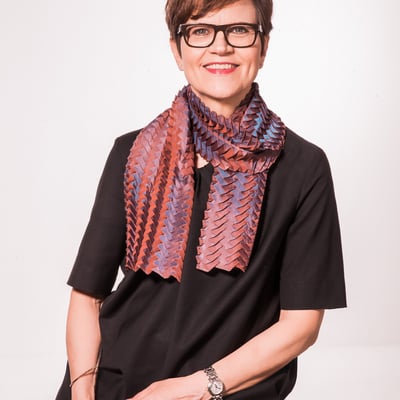
Nawal Gebreel uses innovative 3D fabric manipulations to produce her label’s luxurious scarves and wraps. She sells her work internationally as well as at home. Nawal trained as a textile designer at Manchester Metropolitan University and soon set up her own label. 

Accommodation

Residential option available. Find out accommodation costs and how to book here.

Courses of interest

Feltmaking: exploring nature's palette

Online
Buy course
Tutor: Jeanette Appleton |
Beginners/Intermediate
£47

Inspirational natural dyeing for textiles

Online
Buy course
Tutor: Zoe Burt |
Beginners
£47

Mixed media textiles

Online
Buy course
Tutor: Helyne Jennings |
Suitable for all
£47

Shibori techniques for textiles

31 Jul 2026 to 6 Aug 2026 | West Dean
Places available
Tutor: Rob Jones |
Beginners/Intermediate
£1,322
Further study options for art craft and design short courses

Further study options

Take the next step in your creative practice, with foundation level to Masters in Fine Art study. 

Depending on your experience, start with an Online Foundation Certificate in Art and Design (one year, part-time), a Foundation Diploma in Art and Design made up of 10 short courses taken over two years (part-time) or advance your learning with our BA (Hons) Art and Contemporary Craft: Materials, Making, and Place (six years part-time). All will help you develop core skills, find direction in your practice and build an impressive portfolio in preparation for artist opportunities or higher-level study. See all degree and diploma courses.