Introduction to the Conservation of Books and Archives with Maudie Casserly
Ref: S4D41269
About this course
An introductory course exploring the care of books and archival materials through bookbinding foundations, assessment, handling, simple treatments and basic housing, providing insight into conservation principles and practice.
Course Description
This course is part of our Making Skills: for Degree and Diploma Study, a themed series of short courses that teach foundation skills and offer an insight into studying one of our Higher Education courses at West Dean.
They cover a variety of subject areas and are taught by selected tutors who teach on the Degree and Diploma courses at West Dean, giving students a real insight into the opportunities available for full or part time study. They also offer an excellent opportunity to create and build on your portfolio, often a key requirement when you apply for a higher education programme, develop you practical making skills and find out if you would like to pursue further study.
There will also be opportunities to Meet the Tutors on Tuesday 8 September, with an evening event starting at 5:15pm in The Old Library, where each tutor will give a 10 minute talk about their practice and course. Workshop and studio tours will also be scheduled as part of the week, offering students the chance to see the full range of facilities and courses West Dean offers.
Course details
This four day course provides an introduction to the conservation of books and archives. It is designed for those who are curious about conservation and wish to gain an understanding of what conservation is, the role of the conservator, and the range of approaches used to care for written heritage materials.
The course is structured over two complementary parts: the first two days focus on essential bookbinding skills, and the final two days introduce the principles and practice of conservation. This combination reflects the hands on nature of conservation, where making skills underpin interventive work.
Days 12: Bookbinding foundations
The first two days follow the same introductory bookbinding structure as the Bookbinding course, providing fundamental making skills that are essential for conservation practice.
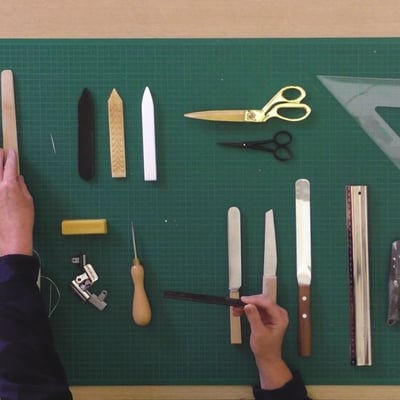
Using practical exercises, you will learn how books are constructed and how they function as physical objects. Your tutor will introduce you to key bookbinding tools, materials and techniques through demonstration and guided practical work.
Practical activities include:
- Decorated papers
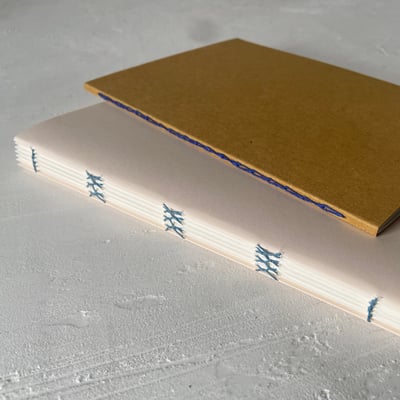
- Making a pamphlet structure using your decorated papers
- Folding and collating sections
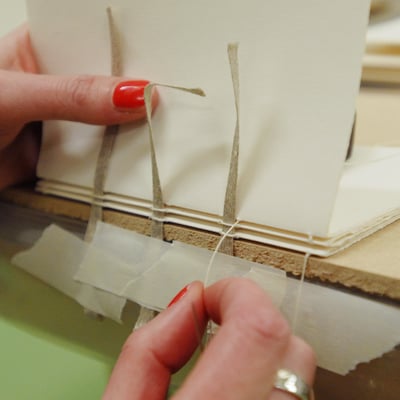
- Sewing a simple textblock
- Attaching covers
- Understanding grain direction, paper characteristics and adhesives
Emphasis is placed on accuracy, material awareness and hand skills, forming a foundation for understanding how and why books deteriorate and how they can be repaired. You will making a pamphlet.
Days 34: Introduction to conservation
Using historical examples, you will handle and assess books and flat paper objects, developing awareness of different conditions, risks and levels of conservation. Your tutor will introduce key conservation concepts through discussion, demonstrations and guided practical work, helping you to understand both decision?making and hands?on processes.
You will be introduced to conservation materials, tools and equipment, including health and safety considerations. Each participant will be given a flat work and a book to work on during the course. Practical activities include surface cleaning, demonstrations of paper and book repair processes, making adhesive, simple documentation, and carrying out first paper repairs and minimal?intervention book repairs.
The course also explores the care of collections through safe handling, storage and housing. You will be introduced to simple book and paper housing solutions, including making a four?flap folder, creating a simple book shoe, and basic mounting of flat items. The final session includes time for discussion and questions.
Throughout the course, emphasis is placed on careful observation, minimal intervention and understanding the responsibilities involved in conservation work. By combining bookbinding and conservation, the course offers a practical insight into how making and repair inform one another, and is particularly suitable if you are considering further study or wish to understand how conservation differs from bookbinding and restoration.
Aims of the course:
- To introduce you to the principles and purpose of conservation
- To help you understand the role of the conservator
- To develop awareness of conservation decision?making and levels of intervention
- To introduce basic conservation materials, tools and techniques
- To develop fundamental bookbinding skills as a foundation for conservation practice
By the end of the course you will have:
- Experience of handling and assessing books and flat paper objects
- An understanding of core conservation principles and practices
- Experience of simple surface cleaning, paper repair and book repair techniques
- Practical knowledge of basic housing and storage solutions
- Practical experience of constructing a simple book structure
- An understanding of how bookbinding techniques inform conservation decisions
Making Skills: for Degree and Diploma Study
Other subjects and short courses on this themed week are:
Printmaking: Combined Techniques
Attendance on the above course offers skills relevant to progressing onto Foundation Diploma in Printmaking
Tapestry Weaving: The Art of Translation
Attendance on the above course offers skills relevant to progressing onto Foundation Diploma in Tapestry
Painting Inspired by Goldsworthy’s Chalk Stone Walk
Attendance on the above course offers skills relevant to progressing onto Foundation Diploma in Art & Design and BA (Hons) Art & Contemporary Craft
Textiles - Techniques to Tell Stories and Experimental Concrete Casting for Sculpture
Attendance on any of the above courses offers skills relevant to progressing onto BA (Hons) Art & Contemporary Craft
Printmaking: Combined Techniques, Experimental Concrete Casting for Sculpture and Tapestry Weaving: The Art of Translation
Attendance on any of the above courses offers skills relevant to progressing onto Graduate Diploma Fine Art and MFA Fine Art
Silversmithing with an Emphasis on Box Making and Blacksmithing: Fundamentals and Individual Projects
Attendance on any of the above courses offers skills relevant to progressing onto FdA Metalwork (Craft Practices)
Woodworking: Tool Control, Posture and Precision
Attendance on the above course offers skills relevant to progressing onto FdA Furniture (Craft Practices)
Bookbinding Sampler: Designing and Creating a Sewn Notebook and Introduction to the Conservation of Books and Archives
Attendance on any of the above courses offers skills relevant to progressing onto FdA Books & Bindings (Craft Practices)
Introduction to the Conservation of Books and Archives
Attendance on the above course offers skills relevant to progressing onto Graduate Diploma Conservation and MA Conservation
Practical Skills in Conservation
Attendance on the above course offers skills relevant to progressing onto Graduate Diploma Conservation
Interior Design Intensive – Process, Planning and Presentation
Attendance on the above course offers skills relevant to progressing onto BA (Hons) Interior Design and HE Diploma Interior Design
Find out more and View all Courses
Course Materials
Included
Everything you will need is included in the fee and the use of specialist tools to use during the course
What students need to bring
An Apron
Available to buy
Available from tutor: A variety of tools and materials to continue bookbinding
Additional information
Please wear appropriate clothing/aprons for the workshop or studio, this includes stout covered footwear (no sandals or open toes).
Timetable
Arrival day - first date of course
Residential students can arrive from 4pm, non-residential students to arrive by 6.45pm for registration
Student welcome, followed by dinner: 6.45pm (dinner included)
Teaching session: 8pm-9pm (attendance is essential)
Daily timetable
Course teaching: 9.15am-5pm
Morning session: 9.15am-12.45pm including coffee/tea break
Lunch break: 12.45pm-2pm (lunch included)
Afternoon session: 2pm-5pm including coffee/tea break
Teaching finishes: 5pm
Evening working: students may have access to workshops until 9pm, but only with permission from the tutor and provided any health and safety guidelines are observed.
Departure day - last date of course
Course teaching: 9.15am-3pm (lunch included)
Teaching finishes: 3pm
Residential students will need to check out of rooms by 10am.
Please note, the tutor may make slight variations to the daily timetable as required.
General Information
Tutors

Accommodation
Residential option available. Find out accommodation costs and how to book here.
Further study options
Take the next step in your creative practice, with foundation level to Masters in Fine Art study.
Depending on your experience, start with an Online Foundation Certificate in Art and Design (one year, part-time), a Foundation Diploma in Art and Design made up of 10 short courses taken over two years (part-time) or advance your learning with our BA (Hons) Art and Contemporary Craft: Materials, Making, and Place (six years part-time). All will help you develop core skills, find direction in your practice and build an impressive portfolio in preparation for artist opportunities or higher-level study. See all degree and diploma courses.